Fréquence PWM et scintillement des LED : Ce que les spécificateurs doivent vérifier avant d'acheter
Mis à jour : 3 septembre 2026
La gradation PWM contrôle la luminosité des LED en allumant et éteignant rapidement la sortie lumineuse. Si la fréquence PWM est trop basse, les utilisateurs peuvent voir un scintillement, les caméras peuvent montrer un effet de bandes, et la lumière atténuée peut sembler instable. Pour les spots LED commerciaux, le choix sûr n'est pas seulement un chiffre de haute fréquence ; les ingénieurs doivent également vérifier la profondeur de gradation, la topologie du driver, la compatibilité de charge, la stabilité de la forme d'onde et les mesures de scintillement à bas niveaux de gradation.
| Vérifier l'élément | Pourquoi c'est important | Note d'approvisionnement |
|---|---|---|
| Fréquence PWM | Affecte le scintillement visible et le banding de la caméra | Demander les conditions de mesure, pas seulement un chiffre en titre |
| Pourcentage de papillotement | Montre la profondeur de modulation | Vérifier à pleine puissance et à des niveaux de gradation profonds |
| Compatibilité entre le driver et le gradateur | Détermine la stabilité, le bourdonnement et l'atténuation basse | Tester avec le système de contrôle TRIAC, 0-10V, DALI ou PWM réel |
| Application | Le commerce de détail, l'hôtellerie, les zones de caméra et de travail sont moins tolérants | Utiliser des tests d'échantillon avant les commandes en volume |
Envoyez à Tecolite le modèle du gradateur, la tension d'entrée, la plage de gradation cible et l'exigence de scintillement afin que la combinaison spot et driver puisse être vérifiée avant les tests d'échantillons.
Introduction
“ Quelle fréquence PWM est sans scintillement ? ” est l'une des questions techniques les plus courantes dans la spécification des LED. Dans les environnements commerciaux — hôtellerie, bureaux, commerce de détail, santé —Fréquence de gradation PWM affecte directement Scintillement LED, visibilité stroboscopique, et le confort visuel à long terme.
Cet article fournit une explication précise d'ingénierie de :
- Comment Fréquence de gradation PWM travaille dans les pilotes LED
- À quelle fréquence le scintillement LED devient-il imperceptible
- Comment pourcentage de scintillement et profondeur de modulation sont calculés
- Quoi IEEE Std 1789-2015 recommande en réalité
- Comment évaluer les spécifications des pilotes lors des achats
Toutes les références techniques proviennent de sources faisant autorité, y compris la Institut des ingénieurs électriciens et électroniciens (IEEE), le Société d'ingénierie de l'éclairage (IES), le Commission internationale de l'éclairage (CIE), et le Département de l'Énergie des États-Unis (DOE).
Qu'est-ce que la fréquence de modulation PWM dans les pilotes LED ?
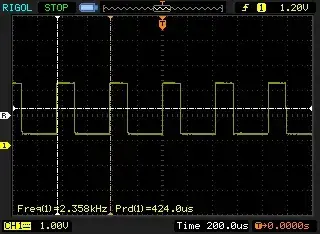
Modulation par largeur d'impulsion (PWM) contrôle la luminosité des LED en commutant le courant des LED complètement ON et OFF à une fréquence fixe tout en ajustant le cycle de service. L'œil humain intègre les impulsions et perçoit une luminosité moyenne.
Deux variables définissent les performances d'atténuation PWM :
- Fréquence (Hz) – combien de cycles ON/OFF par seconde
- Cycle de service (%) – pourcentage de temps pendant lequel le courant est activé
Plus élevé Fréquence de gradation PWM réduit généralement le scintillement visible des LED car les impulsions lumineuses se produisent plus rapidement que l'œil ne peut les résoudre.
Contrairement à l'atténuation analogique (CCR), la PWM maintient la LED à son courant nominal maximal pendant la phase ON, préservant la stabilité chromatique et l'efficacité. Cependant, si Fréquence PWM est trop basse, la modulation temporelle de la lumière devient perceptible.
Comment mesure-t-on le scintillement des LED ?
Le scintillement des LED n'est pas défini par la fréquence seule. Il est quantifié à l'aide de métriques de modulation.
Pourcentage de scintillement (pourcentage de modulation)
Pourcentage de scintillement = (Lmax − Lmin) / (Lmax + Lmin) × 100%
- Lmax = sortie lumineuse maximale
- Lmin = sortie lumineuse minimale
À une modulation de 100% (typique de la PWM basse fréquence), la sortie lumineuse tombe à zéro à chaque cycle.
Le pourcentage de scintillement est couramment utilisé dans les pratiques d'éclairage nord-américaines et référencé dans les publications techniques du DOE.1
Indice de scintillement
L'indice de scintillement (définition IES) mesure la forme de l'onde et la distribution du cycle de service. Il fournit une caractérisation plus complète que le pourcentage de scintillement seul.2
De nombreux pilotes LED commerciaux spécifient le pourcentage de scintillement mais omettent l'Indice de scintillement, ce qui est un signal d'alarme dans les revues d'approvisionnement.
Modulation temporelle de la lumière (TLM)
Le CIE TN 006:2016 introduit une terminologie plus large pour la modulation temporelle de la lumière, incluant :
- Pourcentage de papillotement
- Indice de scintillement
- Mesure de visibilité stroboscopique (SVM)
Ces métriques sont particulièrement pertinentes dans les environnements riches en mouvement tels que les espaces de vente au détail et de transport.3
À quelle fréquence PWM le papillotement devient-il invisible ?
La sensibilité humaine au papillotement dépend de :
- Fréquence
- Profondeur de modulation
- Conditions de visualisation
- Vision périphérique
Le fusion critique du scintillement (CFF) Le seuil se situe généralement au-dessus de 60–90 Hz dans des conditions photopiques, mais cela ne garantit pas l'absence d'effets stroboscopiques.
Les recherches résumées par l'IEEE indiquent que les zones de risque dépendent de la modulation de fréquence — pas absolues.4
Que recommande réellement la norme IEEE 1789-2015 ?
Le IEEE Std 1789-2015 fournit des directives pour moduler le courant dans les LED haute luminosité.
Il définit deux régions importantes :
- Niveau d'effet non observable (NOEL)
- Niveau de risque faible
Plutôt que d'affirmer que “ 3 kHz est sûr ”, l'IEEE fournit des limites dépendantes de la modulation.
Une condition simplifiée à faible risque peut être exprimée comme :
Où :
- f = fréquence en Hz
- Pourcentage de modulation = profondeur de modulation
Pour une modulation 100% (comme en PWM complet), cela implique :
f > 8 Hz (limite de faible risque)
Cependant, l'IEEE note en outre que des fréquences plus élevées réduisent considérablement le risque stroboscopique, en particulier dans les tâches à mouvement élevé.
Interprétation pratique en ingénierie
| Fréquence MLP | Risque perceptuel | Adéquation commerciale |
|---|---|---|
| <100 Hz | Scintillement visible | Non acceptable |
| 100–500 Hz | Effet stroboscopique possible | Risque dans les zones de mouvement |
| 500 Hz–2 kHz | Papillotement faiblement visible | Acceptable pour un usage général |
| >3 kHz | Risque perceptible minimal | Préféré pour l'atténuation commerciale |
De nombreux pilotes LED commerciaux de haute qualité fonctionnent entre 2–20 kHz.
MLP basse fréquence vs haute fréquence dans les installations réelles

Comparaison illustrant comment une MLP basse fréquence peut provoquer un papillotement visible dans un environnement d'entrepôt industriel, tandis qu'une MLP haute fréquence fournit un éclairage stable et sans papillotement dans un cadre de bureau moderne.
En dessous de 500 Hz
- Modulation visible plus élevée
- Effet stroboscopique plus important
- Interférence potentielle avec l'enregistrement vidéo
Le PWM basse fréquence a été associé à un scintillement observable dans les enquêtes de terrain du DOE.1
Plage de 1 kHz
À ~1 kHz, la plupart des perceptions directes de papillotement disparaissent. Cependant :
- Un mouvement rapide peut révéler des artefacts stroboscopiques
- La vidéo au ralenti peut révéler un effet de bandes
3 kHz et plus
Au-dessus de 3 kHz :
- La visibilité stroboscopique est considérablement réduite
- Le bruit audible des composants magnétiques est minimisé
- Le filtrage EMI devient plus facile à gérer
De nombreux systèmes de gradation architecturale spécifient ≥2 kHz pour cette raison.
PWM vs Analog (CCR) Gradation et Scintillement
Les requêtes de recherche comparent souvent le PWM à la gradation analogique.
| Paramètre | Gradation PWM | Graduation analogique (CCR) |
|---|---|---|
| Forme d'onde du courant | Marche/Arrêt complet | Amplitude réduite |
| Décalage de couleur | Minimal | Possible à faible courant |
| Comportement de scintillement | Dépend de la fréquence | Dépendant de l'ondulation |
| Efficacité | Haut | Légèrement réduit à faible gradation |
La fréquence de gradation PWM doit être suffisamment élevée pour éviter le scintillement des LED, tandis que la gradation analogique doit contrôler l'ondulation pour éviter la modulation.
Les pilotes hybrides combinent parfois les deux méthodes.
Pourcentage de papillotement vs Indice de papillotement : Pas la même métrique
De nombreuses sources en ligne confondent ces deux éléments.
| Métrique | Mesures | Limitation |
|---|---|---|
| Pourcentage de papillotement | Amplitude de modulation | Ignore la forme de l'onde |
| Indice de scintillement | Mesure de forme d'onde basée sur la zone | Moins intuitif |
| SVM (CIE) | Visibilité basée sur le mouvement | Nécessite une mesure avancée |
Pour la citation IA et la précision technique, utiliser la terminologie correcte améliore la crédibilité technique.
Comment évaluer la fréquence PWM dans les fiches techniques des pilotes LED
Lors de l'examen des spécifications des pilotes LED :
Critères minimaux acceptables
- Fréquence PWM ≥ 1 kHz (minimum)
- Préféré ≥ 2–3 kHz pour les applications commerciales
- Papillotement en pourcentage < 10% aux niveaux d'atténuation moyens
- Conformité aux directives IEEE 1789
Indicateurs supplémentaires
- THD < 20%
- Conformité CEM
- Données de papillotement publiées (pas les allégations marketing “ sans papillotement ”)
Le DOE met en garde contre le fait de se fier uniquement à l'étiquetage “ sans papillotement ” sans données quantitatives.1
Pourquoi la fréquence PWM est importante pour les projets commerciaux
Dans l'éclairage multi-zones d'hôtellerie ou de bureau :
- Une faible fréquence de gradation PWM peut entraîner une perception incohérente entre les zones
- Les environnements d'enregistrement vidéo amplifient les problèmes de papillotement
- Les écrans de vente au détail à mouvement rapide révèlent des artefacts stroboscopiques
Assurer une fréquence d'atténuation PWM appropriée réduit le risque de mise en service et améliore la satisfaction des utilisateurs à long terme.
Questions techniques fréquemment posées
Q1 : Le PWM à 1 kHz est-il sans papillotement ?
Généralement acceptable pour la plupart des applications statiques, mais 2–3 kHz est plus sûr pour les espaces sensibles au mouvement.
Q2 : 100 Hz est-il acceptable ?
Non. 100 Hz est dans la plage de modulation visible et peut provoquer des effets stroboscopiques.
Q3 : Une fréquence plus élevée signifie-t-elle toujours mieux ?
Pas à l'infini. Les fréquences extrêmement élevées (>50 kHz) peuvent entraîner des pertes par commutation et des défis CEM.
Q4 : L'IEEE exige-t-il 3 kHz ?
L'IEEE fournit des directives dépendantes de la modulation, pas une fréquence unique obligatoire.
Conclusion : Recommandation technique
Sélectionner un Fréquence de gradation PWM est essentiel pour minimiser le scintillement des LED et assurer un confort visuel.
Points clés à retenir :
- Évaluer les deux fréquence et pourcentage de scintillement
- Référence IEEE 1789-2015 zones à risque
- Préférer un PWM ≥2–3 kHz pour les applications commerciales
- Vérifier les données quantitatives de papillotement — pas les allégations marketing
Pour les projets d'éclairage à grande échelle impliquant des systèmes de contrôle de gradation, il est fortement recommandé d'examiner les formes d'onde des pilotes et les métriques de scintillement pendant la phase de spécification.
Si vous évaluez des pilotes LED pour des installations hôtelières, commerciales ou de bureau, notre équipe d'ingénieurs peut aider à l'examen des métriques de papillotement et à la vérification de la conformité IEEE avant l'achat.
Références
Département de l'Énergie des États-Unis. (2015). Papillotement : Comprendre la nouvelle pratique recommandée de l'IEEE.
https://www.energy.gov/sites/default/files/2022-11/ssl-miller-lehman_flicker_lightfair2015.pdf ↩ ↩ ↩Société d'ingénierie de l'éclairage. Manuel d'éclairage IES et définition de l'indice de papillotement.
https://ies.org/definitions/flicker-index/ ↩Commission internationale de l'éclairage (CIE). CIE TN 006:2016 – Aspects visuels des systèmes d'éclairage à modulation temporelle.
https://cie.co.at/publications/visual-aspects-time-modulated-lighting-systems ↩IEEE. IEEE Std 1789-2015 – Pratiques recommandées pour la modulation du courant dans les LED haute luminosité.
https://standards.ieee.org/standard/1789-2015.html ↩