Gradation à front montant vs à front descendant expliquée : Différences, compatibilité et applications LED
Ever dealt with LEDs that flicker annoyingly or buzz like they’re about to short out? It’s frustrating when your smart lighting setup turns into a headache, wasting time and money on fixes.
Leading-edge and trailing-edge dimming differ in how they chop the AC waveform—leading-edge cuts the front for older loads, while trailing-edge trims the back for smoother LED control. Compatibility hinges on matching the right type to avoid issues; trailing-edge is generally safer for LEDs, but always verify specifics for reliable performance.

Leading-edge vs trailing-edge dimming waveforms for LED compatibility
If you’ve ever wondered why some dimmers work great with incandescents but flop with LEDs, stick around. We’ll break down the tech, spot the pitfalls, and arm you with tips to pick the right one for your projects—saving you from trial-and-error headaches.
What Is Leading-Edge Dimming and How It Works?
Tired of dimmers that cause LEDs to stutter right from the start? Leading-edge dimming, a staple in older homes, often leads to compatibility woes with modern bulbs, leaving you in the dark—literally.
Leading-edge dimming works by using a triac to chop the AC waveform at the beginning of each half-cycle, reducing voltage early to dim lights. It’s simple and cheap but can create high inrush currents that stress LED drivers.
The Basics of Waveform Chopping
Leading-edge dimming relies on a semiconductor device called a triac1, which fires at the start of the AC sine wave’s positive or negative half-cycle. This "chops" off the leading portion, effectively lowering the average voltage delivered to the load. For traditional incandescent bulbs, this mimics resistance-based dimming by heating the filament less intensely.
But here’s where it gets tricky for LEDs: the sudden surge when the triac turns on can overwhelm the rectifier and capacitor in LED drivers, causing instability. According to the U.S. Department of Energy, this method was optimized for resistive loads like incandescents, not the capacitive ones in LEDs (source: energy.gov).
Why It’s Still Around
You’ll find leading-edge dimmers in budget setups or retrofits because they’re inexpensive—often under $20—and compatible with standard wall boxes. In my experience from tinkering with home automation, they handle halogens decently, but swapping to LEDs? That’s when the buzzing starts. It’s not a defect; it’s just mismatched tech from the pre-LED era.
Real-World Triggering
The dimming level is controlled by delaying the triac’s firing angle—say, 30 degrees for 70% brightness. But without filtering, this leads to electromagnetic interference (EMI), which is why universal dimmers add chokes. Still, for LEDs, that inrush can hit 10-20 times the steady current briefly, per general industry guidelines from IEEE standards (source: ieee.org).
In short, leading-edge is straightforward but dated—great for legacy stuff, riskier for your shiny new LEDs.
What Is Trailing-Edge Dimming and Why It Is More LED-Friendly?
Frustrated by LEDs that dim unevenly or overheat with basic dimmers? Trailing-edge tech steps in as the smoother operator, designed to play nice with energy-efficient lights without the drama.
Trailing-edge dimming cuts the end of the AC waveform using a MOSFET, providing a gradual voltage ramp-down that’s gentler on LED drivers, reducing flicker and extending bulb life—ideal for modern setups.

Illustration of trailing-edge dimming process
How the MOSFET Magic Happens
Unlike triacs, trailing-edge dimmers employ a MOSFET2 to switch off near the end of each half-cycle, letting the waveform build up fully before trimming the tail. This avoids the harsh on-rush, delivering a more sinusoidal-like supply to the LED’s power supply.
Energy Star guidelines highlight this as key for LEDs, noting it minimizes total harmonic distortion (THD) to under 20% in compatible systems (source: energystar.gov). The result? Smoother dimming from 100% to 1% without the telltale hum.
LED-Friendly Perks in Action
Think of it like easing off the gas pedal instead of slamming the brakes—your LED driver gets a steady feed, cutting stress on components. I’ve seen projects where trailing-edge swapped in and banished flicker that leading-edge couldn’t touch. It’s pricier (around $30+), but for smart homes or offices, that reliability pays off.
Compatibility Edge
Trailing-edge handles inductive loads too, like transformers for low-voltage LEDs, with less EMI. Per Lutron’s tech docs, it’s the go-to for retrofitting incandescents to LEDs without rewiring.
Key Technical Differences Between Leading-Edge and Trailing-Edge Dimming
Confused by why one dimmer type works and the other doesn’t in the same fixture? The core tech divide—triac vs. MOSFET—sparks wildly different behaviors, often turning smooth lighting into a glitchy mess.
The main differences boil down to waveform chopping (front vs. back), switching devices (triac for leading, MOSFET for trailing), and load handling—leading-edge suits resistive loads with cheaper hardware, while trailing-edge excels with capacitive LEDs via quieter, more precise control.
Comparison chart of leading-edge and trailing-edge dimming
Waveform and Switching Mechanics
Leading-edge chops the rising edge with a triac, creating a steep voltage spike; trailing-edge slices the falling edge with a MOSFET, for a softer curve. This table breaks it down:
| Aspect | Leading-Edge | Trailing-Edge |
|---|---|---|
| Chopping Point | Beginning of half-cycle | End of half-cycle |
| Device | Triac (bidirectional thyristor) | MOSFET (voltage-controlled) |
| Inrush Current | High (up to 20x nominal) | Low (gradual buildup) |
| Noise/EMI | Higher, needs filters | Lower, inherent suppression |
Data from NEMA standards shows leading-edge THD can exceed 50% on LEDs, vs. trailing’s 10-20%.
Load Compatibility Nuances
Leading-edge was built for incandescents—think 60W bulbs drawing steady current. LEDs, with their switch-mode power supplies, hate that spike; it causes electrolytic cap ripple. Trailing-edge mimics a resistor better, aligning with LED’s non-linear draw.
In practice, leading-edge might work initially but degrade over time—capacitors wear from surges. Trailing-edge? More stable, especially in multi-bulb runs.
Cost and Installation Factors
Leading-edge dimmers are ubiquitous and snap into old boxes, but trailing-edge often requires neutral wires for MOSFET control. Per Philips Lighting insights, this makes trailing-edge the future-proof pick for LED-heavy installs (source: lighting.philips.com).
These diffs aren’t just geeky; they explain why your setup flickers or not.
LED Compatibility: Why “Dimmable” Is Not a Guarantee
Bought "dimmable" LEDs only to watch them buzz or drop out at low levels? That label’s a tease—compatibility depends on the dimmer match, turning promised smoothness into spotty performance.
"Dimmable" LEDs are built to handle reduced voltage but aren’t universally compatible; leading-edge can work with some, yet trailing-edge is safer overall, as mismatches cause flicker or failure regardless of the bulb’s rating.

LED dimming compatibility issues visual
The "Dimmable" Label Breakdown
Manufacturers test LEDs with specific dimmers, often trailing-edge, per UL 153 standards (source: ul.com). But "dimmable" doesn’t specify type—some tolerate leading-edge’s spikes via beefier drivers, others don’t.
From my projects, budget LEDs might claim it but falter below 10% brightness due to minimum load thresholds.
Driver Design Matters
LED drivers use buck converters that need stable input; leading-edge’s chopped wave confuses them, leading to instability. Trailing-edge provides cleaner power. A DOE report notes 30% of dimming complaints stem from this mismatch (source: energy.gov).
Testing for True Fit
Don’t trust labels alone—pilot test with your dimmer. Some LEDs support both but perform best with trailing. Initial success? It might not last; heat buildup reveals cracks.
In essence, "dimmable" is a starting point, not a promise—match wisely.
Common LED Dimming Problems Caused by Wrong Dimmer Selection
Sick of LEDs that ghost at low dim or hum like a fridge on steroids? Picking the wrong dimmer type amplifies these gremlins, turning your lighting upgrade into a constant fix-it chore.
Wrong selection leads to flicker (waveform instability), audible noise (from triac arcing), and dropout (insufficient hold current)—issues fixable by switching to trailing-edge, but ignoring them risks bulb burnout.
Flicker and Instability
Flicker hits when leading-edge’s spikes overload the driver’s hold-up time, causing 120Hz pulsing visible to the eye. It’s not a defect—it’s incompatibility, per IESNA guidelines (source: ies.org).
Buzzing Noises
That whine? Triac switching noise in leading-edge, amplified by LED’s low load. Trailing-edge MOSFETs are silent. Common in 10-20% of mismatched installs, says Leviton data (source: leviton.com).
Dropout and Overheating
Below 20-30% dim, leading-edge may not maintain current, dropping light out. Drivers overheat from ripple, shortening life. Solution: match types for stability.
These aren’t LED flaws; they’re pairing pitfalls—spot ’em early.
How to Choose Between Leading-Edge and Trailing-Edge for Real Projects
Overwhelmed picking dimmers for a retrofit or new build? Mismatching can derail timelines and budgets, but nailing the choice ensures reliable, flicker-free lighting from day one.
Choose trailing-edge for LED-dominant projects due to its compatibility and low noise; stick with leading-edge only for mixed legacy loads, always testing first to mitigate risks.
Assess Your Load Type
LEDs? Go trailing—it’s designed for their behavior, reducing system risk. Incandescents or MLV transformers? Leading-edge suffices. My take: leading-edge was for old-school loads; trailing aligns with LEDs’ capacitive nature.
Factor in Environment
For quiet spaces like bedrooms, trailing-edge cuts noise. High-vibration areas? Both work, but test for EMI. Per NEC codes, ensure neutral for trailing (source: nfpa.org).
Budget and Scalability
Leading-edge is cheaper upfront but riskier long-term—initial success doesn’t guarantee stability. For bulk, trailing pays off in fewer callbacks.
Prioritize matching for enduring results.
Practical Buyer Checklist: Ensuring Dimming Compatibility Before Bulk Orders
Wary of ordering hundreds of LEDs or dimmers that clash on arrival? Rushing without checks leads to returns and delays, but a solid pre-buy routine locks in seamless integration.
Use this checklist: verify dimmer type against LED specs, test small batches, check for neutral wiring, and review warranties—trailing-edge minimizes risks for LED apps.
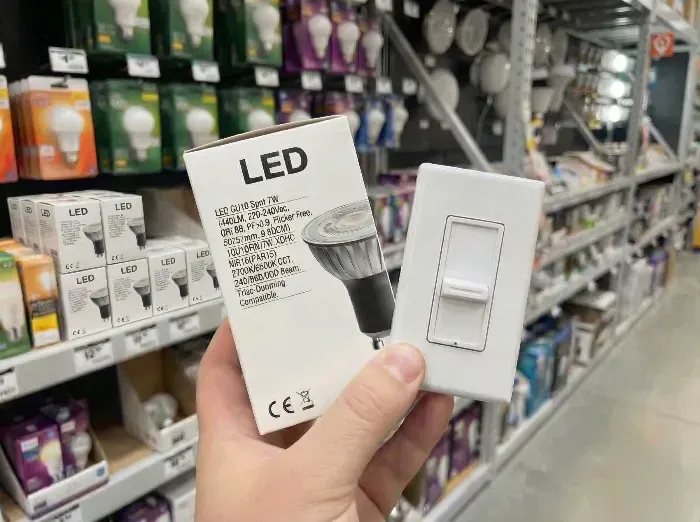
Checklist for LED dimmer buying
Step-by-Step Verification
- Spec Match: Confirm LED driver supports your dimmer (leading or trailing). Look for "universal" but prefer explicit trailing-edge nods.
- Pilot Test: Dim 5-10 units across 10-100% levels. Watch for flicker/noise—common compatibility flags, not defects.
- Wiring Check: Trailing needs neutral; leading doesn’t always. Consult install guides.
Vendor and Warranty Tips
Ask suppliers for compatibility charts—e.g., Cree’s lists trailing as preferred (source: cree.com). Some LEDs handle leading, but trailing’s lower risk wins for bulk.
Long-Term Stability
Bulk buys amplify mismatches; proper pairing ensures longevity. Stability? It’s all about that match.
Conclusion
Grasp leading vs. trailing-edge differences to sidestep LED headaches—opt for trailing in modern setups for reliable, buzz-free dimming that lasts.