Les ampoules LED chauffent-elles, et à quel point est-ce trop chaud ?
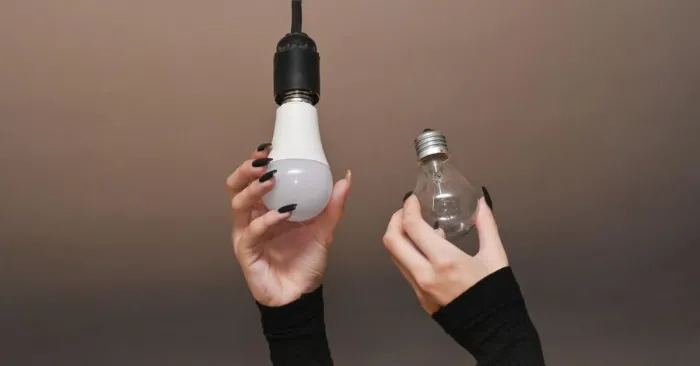
Les ampoules LED semblent plus froides que les ampoules halogènes, mais elles ne sont pas froides. Ce petit malentendu peut amener les acheteurs à juger de la sécurité du produit de manière erronée.
Oui, les ampoules LED chauffent, mais la plupart de la chaleur reste autour de la puce LED, du driver et du boîtier. Une bonne ampoule LED évacue cette chaleur des parties sensibles, afin que l'ampoule reste sûre, stable et durable.
Dans mon activité d'éclairage, je rencontre souvent des acheteurs qui touchent un échantillon d'ampoule et demandent : “ Pourquoi est-elle chaude ? ” Ma réponse est simple. La chaleur est normale. La vraie question est de savoir où va la chaleur, à quelle vitesse elle se déplace et si la conception du produit maintient la LED dans une plage de fonctionnement sûre.
À quelle température chauffent les ampoules LED ?
Les ampoules LED peuvent devenir tièdes ou chaudes au toucher, mais elles sont généralement bien plus froides que les ampoules halogènes ou à incandescence. La température exacte dépend de la puissance, du matériau du boîtier, de la conception du luminaire, du flux d'air de la pièce et de la durée d'utilisation.
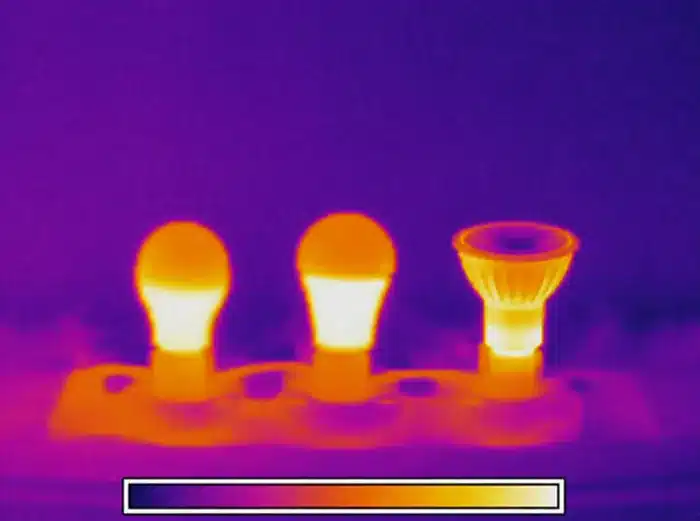
Beaucoup de gens pensent que les ampoules LED restent froides car elles consomment moins d'énergie. Cette idée est facile à comprendre, mais elle n'est pas correcte. Les LED sont efficaces, pas magiques. Une ampoule LED de 5W peut remplacer une halogène de 40W ou 50W dans de nombreux cas, donc elle gaspille beaucoup moins d'énergie sous forme de chaleur. Mais la LED convertit toujours une partie de son électricité en chaleur.
Sensation typique au toucher
| Type d'ampoule | Sensation tactile commune | Risque de chaleur comparé aux LED |
|---|---|---|
| Ampoule à incandescence | Très chaud | Haut |
| Projecteur halogène | Extrêmement chaud | Très élevé |
| Ampoule LED avec corps en plastique | Chaud à très chaud | Inférieur |
| Ampoule LED avec corps métallique | Plus chaud sur le boîtier | Plus basse pour les pièces internes si bien conçue |
Pour les utilisateurs domestiques de base, la température au toucher est souvent le premier signe qu'ils remarquent. Pour les acheteurs B2B, la température au toucher n'est qu'une partie de l'histoire. Une ampoule peut sembler chaude à l'extérieur et être bien conçue. Une ampoule peut aussi sembler plus froide à l'extérieur mais piéger la chaleur à l'intérieur, ce qui peut endommager plus rapidement la puce LED ou le driver.
Pourquoi “ chaud ” n'est pas toujours mauvais
Lorsque je teste les spots LED dans notre usine, je ne me contente pas de toucher le boîtier. Je vérifie la structure, le chemin de la chaleur et les conditions de fonctionnement. Si un boîtier métallique semble chaud, cela peut signifier que la chaleur s'évacue correctement vers l'extérieur. C'est généralement préférable à garder la chaleur autour de la puce LED.
Une erreur courante est de juger de la qualité d'une LED uniquement par la sensation tactile. La main humaine n'est pas un instrument de test. La plupart des gens ressentent un inconfort lorsqu'une surface se situe dans la plage chaude élevée, mais cela ne montre pas directement la température de jonction de la LED à l'intérieur de l'ampoule. Pour les acheteurs sérieux, je suggère de consulter la fiche technique du produit, de demander des rapports de test de température et de tester l'ampoule dans le luminaire réel.
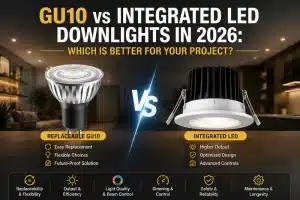
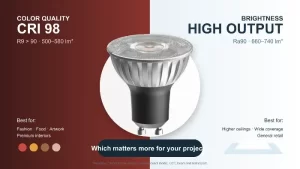
Les spots LED GU10 en sont un bon exemple. Ils sont petits. Ils fonctionnent souvent à l'intérieur de boîtiers encastrés. Ils ont un flux d'air limité. Donc même un GU10 de faible puissance peut sembler chaud après une longue utilisation. Cela ne signifie pas que l'ampoule est dangereuse. Cela signifie que la conception thermique doit être robuste. Dans de nombreux cas de remplacement, un spot LED GU10 de 4W à 6W peut remplacer un halogène de puissance bien supérieure, ce qui réduit considérablement la chaleur tout en conservant une luminosité utile.
Pourquoi les ampoules LED produisent-elles de la chaleur ?
Les ampoules LED produisent de la chaleur car aucune source lumineuse ne convertit 100% de l'énergie électrique en lumière visible. La chaleur provient de la puce LED, du circuit du driver et de la résistance électrique à l'intérieur de l'ampoule.
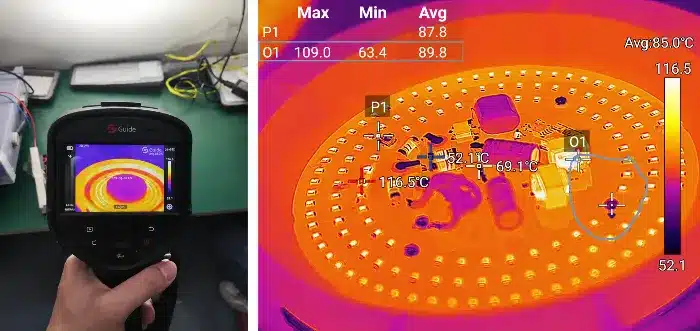
La puce LED crée de la lumière lorsque le courant traverse le matériau semi-conducteur. Une partie de l'énergie devient de la lumière visible. Une partie de l'énergie devient de la chaleur. Le driver produit également de la chaleur car il transforme et contrôle l'alimentation entrante. Ceci est particulièrement important dans les ampoules à tension secteur, comme les lampes E27 et GU10.
Principales sources de chaleur à l'intérieur d'une ampoule LED
| Source de chaleur | Ce qu'elle fait | Pourquoi c'est important |
|---|---|---|
| Puce LED | Produit de la lumière | Une température élevée de la puce réduit le flux lumineux et la durée de vie |
| Facteur déterminant | Contrôle le courant | Une mauvaise conception du driver peut surchauffer et tomber en panne prématurément |
| Carte PCB | Contient les composants LED | Un matériau de mauvaise qualité ralentit le transfert de chaleur |
| Boîtier | Évacue la chaleur vers l'extérieur | Un bon boîtier protège les pièces internes |
| Fixation | Tient l'ampoule | Les luminaires fermés peuvent piéger la chaleur |
J'explique souvent la chaleur des LED par une phrase simple : la lumière vient de l'avant, mais la chaleur doit sortir par l'arrière. C'est pourquoi la conception du corps est si importante. Si l'ampoule ne peut pas évacuer la chaleur de la puce LED, le flux lumineux peut diminuer plus rapidement. La couleur peut se décaler. Le driver peut tomber en panne avant la durée de vie promise.
Pourquoi la température au toucher est importante
La température au toucher est importante car les gens interagissent avec les ampoules lors de l'installation, du remplacement et de la maintenance. Dans un hôtel, un magasin ou un projet d'appartement, une surface chaude peut générer des plaintes même si le produit est techniquement sûr. Les acheteurs doivent penser à la fois à la sécurité électrique et au ressenti de l'utilisateur.
Mais la température au toucher ne devrait pas être le seul critère. Une ampoule bien fabriquée peut transférer la chaleur vers la surface, donc elle semble plus chaude. Une mauvaise ampoule peut cacher la chaleur à l'intérieur car le corps en plastique bloque le transfert de chaleur. L'extérieur peut sembler moins chaud, mais la puce LED peut en souffrir.
Pour les acheteurs en gros, je suggère de poser trois questions avant d'approuver un échantillon. Premièrement, l'ampoule fonctionne-t-elle à la puissance nominale sans scintillement ni odeur ? Deuxièmement, la luminosité reste-t-elle stable après un fonctionnement prolongé ? Troisièmement, le fournisseur fournit-il une réponse claire sur le matériau du boîtier, la qualité du driver et les tests de température ? Ces questions sont plus utiles que de simplement dire : “ Cette ampoule semble chaude. ”
La chaleur des LED n'est pas seulement une question de confort. C'est aussi une question de durée de vie. Une température interne élevée est l'une des principales raisons de la défaillance précoce des produits LED. C'est pourquoi les usines de qualité accordent de l'importance aux pièces en aluminium, à la pâte thermique, au matériau du PCB et à la disposition du driver. Ces petits détails ne semblent pas passionnants dans un catalogue, mais ils déterminent si une ampoule fonctionne bien après des milliers d'heures.
Pourquoi un boîtier d'ampoule LED en métal semble-t-il plus chaud qu'un boîtier en plastique ?
Un boîtier d'ampoule LED en métal semble souvent plus chaud qu'un boîtier en plastique car le métal conduit mieux la chaleur. Cela peut être un bon signe car le boîtier évacue la chaleur de la puce LED et du driver.
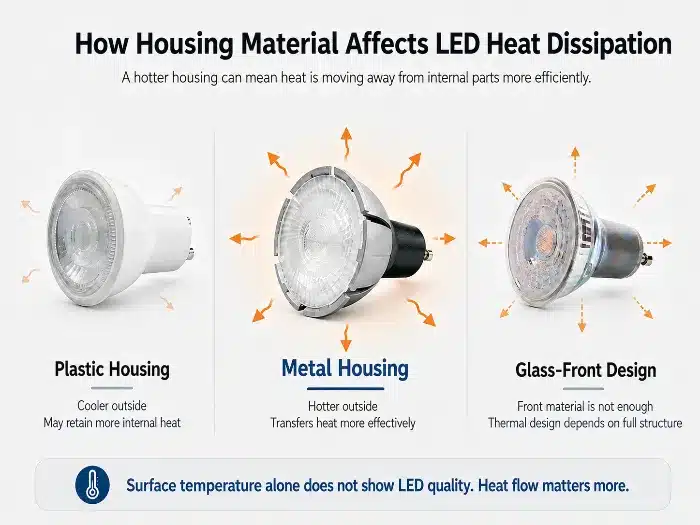
De nombreux acheteurs sont surpris lorsqu'une ampoule LED métallique est plus chaude qu'une ampoule en plastique. Ils pensent que l'ampoule en plastique plus froide doit être plus sûre. Dans de nombreux cas, l'inverse peut être vrai. Le métal extrait la chaleur des parties internes et la libère dans l'air. Le plastique est un moins bon conducteur thermique, il peut donc piéger plus de chaleur à l'intérieur.
Boîtier métal vs plastique
| Matériau du boîtier | Sensation de surface | Transfert de chaleur | Avantage courant | Préoccupation courante |
|---|---|---|---|---|
| Aluminium / métal | Plus chaud | Forte | Potentiel de durée de vie amélioré | Température de contact plus élevée |
| Plastique | Extérieur plus frais | Plus faible | Inconfort au toucher réduit | Risque de chaleur interne plus élevé |
| Céramique | Chaud à très chaud | Bon | Stable et durable | Coût plus élevé |
| Conception hybride | Équilibré | Moyen à fort | Équilibre coût et performance | La qualité dépend de la conception |
À mon avis, un boîtier métallique est comme un radiateur. Un radiateur semble chaud parce qu'il fait son travail. S'il restait froid alors que le moteur était chaud, je m'inquiéterais. Les ampoules LED suivent la même idée. La puce LED et le pilote ont besoin d'un chemin pour évacuer la chaleur. Un corps métallique offre ce chemin.
La vraie question de l'acheteur
La vraie question n'est pas : “ Le boîtier est-il chaud ? ” La vraie question est : “ La chaleur est-elle contrôlée ? ” Si la réponse est oui, un boîtier métallique plus chaud peut aider l'ampoule à durer plus longtemps. Si la réponse est non, l'ampoule peut quand même tomber en panne prématurément.
Cela importe beaucoup pour les projecteurs GU10 et les projecteurs LED dimmables. Ces produits sont compacts. Ils ont également besoin d'espace pour l'optique, les composants du driver et la dissipation thermique. Lorsqu'un client demande un flux lumineux élevé dans un petit boîtier, le défi thermique devient plus difficile. Si le fournisseur réduit uniquement les coûts en utilisant un boîtier mince et des composants de driver bon marché, le produit peut sembler correct la première semaine. Mais il peut perdre de la luminosité, scintiller ou tomber en panne après une utilisation prolongée.
Pourquoi la durée de vie dépend du flux thermique
La durée de vie des LED est fortement liée à l'écoulement de la chaleur. La puce LED n'aime pas les températures élevées. Le condensateur du pilote n'aime pas non plus la chaleur. Lorsque la température reste élevée pendant de longues heures, les matériaux vieillissent plus rapidement. C'est pourquoi une ampoule avec une meilleure dissipation thermique peut maintenir des performances stables plus longtemps.
Pour les acheteurs B2B, je suggère de comparer les échantillons après 2 ou 3 heures de fonctionnement continu, pas seulement après 5 minutes. Je suggère également de les tester dans le luminaire réel. Une lampe de bureau ouverte et un encastré de plafond ne créent pas les mêmes conditions thermiques. Une ampoule qui fonctionne bien à l'air libre peut devenir trop chaude dans un luminaire fermé.
C'est aussi pourquoi la communication avec le fournisseur est importante. Un fournisseur professionnel doit expliquer pourquoi un corps en métal semble chaud, quel matériau est utilisé et comment le produit contrôle la chaleur. Un fournisseur qui se contente de dire “ les LED sont froides ” ne donne pas une réponse sérieuse.
Comment savoir si la chaleur des LED est acceptable ?
La chaleur des LED est acceptable lorsque l'ampoule fonctionne sans odeur, scintillement, changement de couleur, ramollissement des pièces ou chute rapide du flux lumineux, et lorsque le produit est utilisé dans les limites du luminaire, de la tension et de la température ambiante spécifiés.
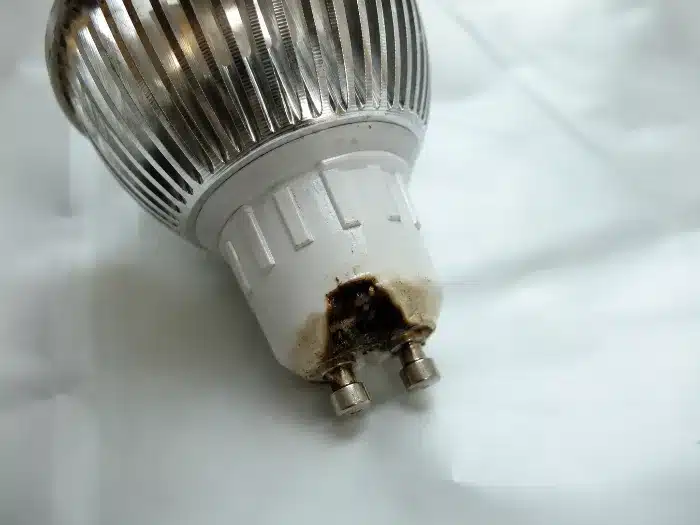
Une ampoule LED chaude est normale. Une ampoule LED dangereusement chaude donne généralement des signes d'avertissement. Elle peut sentir le plastique brûlé. Elle peut scintiller après chauffage. Elle peut devenir plus faible pendant un fonctionnement prolongé. Elle peut décolorer le boîtier ou endommager le matériau à proximité. Ces signes ne doivent pas être ignorés.
Vérification simple sur le terrain pour les acheteurs
| Vérifier l'article | Situation normale | Signe d'avertissement |
|---|---|---|
| Température de surface | Chaud ou très chaud mais stable | Trop chaud pour toucher même un court instant |
| Odeur | Aucune odeur | Odeur de brûlé ou chimique |
| Flux lumineux | Stable | Baisse après chauffage |
| Scintillement | Aucun scintillement visible | Scintillement après 10 à 30 minutes |
| Boîtier | Aucun changement de couleur | Jaunissement, fissuration ou déformation |
| Fixation | Spécifié pour l'ampoule | Luminaire fermé avec ampoule non spécifiée |
Je conseille généralement aux clients de tester une ampoule à l'endroit même où elle sera utilisée. Cela semble simple, mais de nombreux problèmes proviennent d'un test dans de mauvaises conditions. Un échantillon peut passer sur une table, mais échouer dans un downlight scellé. Une ampoule peut bien fonctionner dans un bureau frais, mais chauffer davantage dans un plafond de restaurant ou un couloir d'hôtel.
Méthode de test pratique
Un test simple peut aider avant un achat en gros. Installez l'ampoule dans le luminaire réel. Allumez-la pendant au moins 2 heures. Gardez les conditions de la pièce proches de l'utilisation réelle. Vérifiez le flux lumineux, l'odeur, le scintillement, l'état du boîtier et le matériau à proximité. Si possible, utilisez un thermomètre infrarouge pour la surface extérieure. Pour un test plus approfondi, demandez au fournisseur les données de test de température de la carte LED et de la zone de pilotage.
Questions que les acheteurs devraient poser aux fournisseurs
| Question | Pourquoi cela aide |
|---|---|
| Quel matériau de boîtier est utilisé ? | Cela montre la conception de la dissipation thermique |
| L'ampoule convient-elle aux luminaires fermés ? | Cela évite la surchauffe dans les espaces restreints |
| Quelle est la plage de température ambiante de fonctionnement ? | Cela aide à correspondre au site du projet |
| Quels composants de pilotage sont utilisés ? | Cela affecte la résistance à la chaleur et la durée de vie |
| Avez-vous des enregistrements de test de vieillissement ? | Cela montre le contrôle de production |
| L'ampoule est-elle certifiée pour le marché cible ? | Cela soutient les vérifications de sécurité et d'importation |
Pour le commerce de gros, l'évaluation de la chaleur devrait faire partie du contrôle qualité. Je ne recommande pas de choisir l'ampoule la moins chère uniquement par watt et lumen. Certains fournisseurs mettent en avant des nombres de lumen élevés mais ignorent la chaleur. Cela peut attirer l'attention sur la page produit, mais peut créer des problèmes après-vente plus tard.
Une bonne ampoule LED équilibre luminosité, puissance, taille du boîtier, qualité du driver et dissipation thermique. Lorsque cet équilibre est correct, l'ampoule peut sembler tiède voire chaude au toucher sur la coque, mais elle reste sûre et fiable. Si cet équilibre est mauvais, même une ampoule en plastique semblant froide peut avoir une courte durée de vie.
Conclusion
Les ampoules LED chauffent effectivement. L'important n'est pas une chaleur nulle, mais un contrôle thermique sûr, une bonne conception du boîtier et une utilisation correcte dans le luminaire adapté.