クイックアンサー:小売スポットライトの配置方法
- 使用する 30°–45° 照明角度 グレアと影を避けるため
- 選ぶ 15°–40°のビーム角 ディスプレイサイズに基づく
- 維持 1000–3000ルクス ほとんどの小売ディスプレイ向け
- 照明器具の配置 展示対象から1.0–2.0m
ほとんどの小売店において:
30°角度 + 24°–36°ビーム = 焦点と均一性の最適なバランス
はじめに
小売スポットライトの配置は、環境照明や一般照明デザインを含む完全な小売照明戦略の一部です。.
商業小売店の内装工事では、不適切な 小売スポットライト配置 試運転の遅延と高価な手直しの最も一般的な原因の一つです。.
照明配置の不備は以下の原因となります:
- ディスプレイ全体の不均一な照明
- マネキンや棚に見える影
- 製品の明瞭さを損なうグレア
- エリア間での照明の不統一
照明学会のガイダンスによれば、照明の質は視覚的知覚と小売業のパフォーマンスに直接影響し、適切なスポットライトの配置は両方にとって極めて重要です。 工学的実行と商業的成果.
請負業者や販売代理店にとって、これらの問題はしばしば以下のように翻訳されます:
- 再調整中の20–30%増加した人件費
- 店舗開業の遅延
- 顧客の不満と潜在的なプロジェクトペナルティ
小売スポットライト配置決定ガイド

実際の決定を簡素化するために:
- マネキン → 30° 角度 + 24° ビーム
- 棚 → 35°–45° + 36°ビーム
- ジュエリー → 30° + 15°ナロービーム
- ウィンドウディスプレイ → 20°–30° + ワイドビーム
ベストプラクティス:
一致させる ビーム角と展示サイズの不一致, 、および 視認方向に対する照明角度
小売業におけるスポットライト配置の重要性
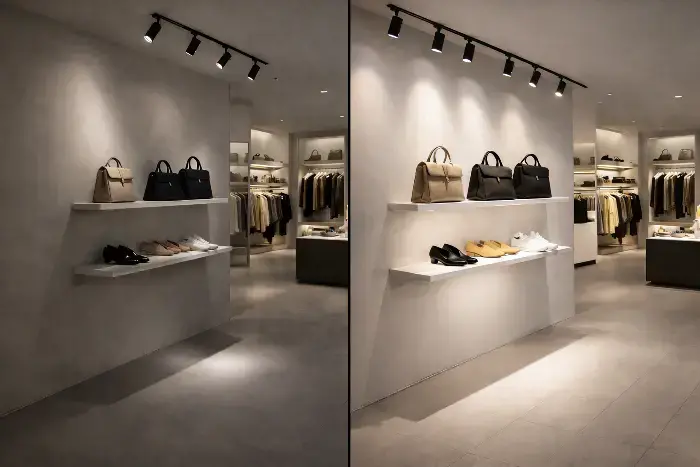
ブティック照明のビフォーアフター比較。改善された照明が、展示棚のアパレル、アクセサリー、履物の視認性とプレゼンテーションをどのように向上させるかを示しています。.
実際のプロジェクトへの影響
不適切なスポットライトの配置は、しばしば以下の結果をもたらします:
- 主要商品の暗いゾーン
- 輝度分布の不均一
- 現場での繰り返し調整
これにより設置時間が増加し、照明性能の一貫性が低下します。.
工学的視点
小売照明は、以下の制御に基づいています コントラストと方向性, 明るさだけではありません。.
これらの原則は、以下のような測光法則に基づいています
逆二乗法則と
ランベルトの余弦則.
これらは光の広がり方と表面を照らす効果を決定します。.
参照:
CIE照明基準 – https://cie.co.at/publications
小売照明における30°–45°の法則
その 30°–45°の法則 は小売照明設計で最も広く使用されているガイドラインです。.
仕組みの解説
- <30° → 強い影と過度な劇的コントラスト
45° → グレアの増加と平坦な照明
実用的な応用
| 角度 | 申し込み | 効果 |
|---|---|---|
| 30° | 高級ディスプレイ/マネキン | 強いコントラスト |
| 35°–40° | 一般小売 | バランス型 |
| 45° | 壁面ディスプレイ | 均一な照明 |
簡易工学公式
30° の照明角度を実現するには:
D = (H_ceiling − H_target) × tan(30°)例:
- 天井高: 3.0m
- 表示高: 1.2m
オフセット ≈ 1.0m
これは小売照明の推奨事項と一致しています:
CIBSE LG9ガイド: https://www.cibse.org/knowledge-research/knowledge-portal/lighting-guides
30°対45°:焦点性対均一性
30° → 「美術館効果」“
- 強いコントラスト
- 高級品や宝飾品に最適
45° → 「商業用ウォッシュ」“
- 均一な照明
- アパレルおよび棚陳列に適しています
強調か均一性のどちらが必要かに基づいて選択してください
ビーム角度が視認性に与える影響
ビーム角度は光が表面に広がる範囲を定義します。.
典型的なアプリケーション
| ビーム角 | 申し込み | 効果 |
|---|---|---|
| 15° | 宝飾品 | 高い焦点 |
| 24°–36° | マネキン | バランス型 |
| 40°–60° | 棚 | 広いカバレッジ |
ビーム角(例: 24° 対 36°, スポットライトビーム角度の選択に関するガイドをご参照ください。.
参照:
照明研究センター – https://www.lrc.rpi.edu/programs
小売エリア別推奨スポットライト配置
| エリア | 角度 | ビーム | 間隔 |
|---|---|---|---|
| 壁面 | 40°–45° | 36° | 1.2–1.5m |
| マネキン | 30° | 24° | 1.0–1.2m |
| 窓 | 20°–30° | 36°–60° | 0.8–1.0m |
使用 ゾーンごとに主要な光の方向を1つ 影の重なりを避けるため
推奨照度レベル
| ディスプレイタイプ | 平均ルクス | ピーク照度 |
|---|---|---|
| 衣料品 | 1000–2000 | 3000 |
| 宝飾品 | 2000–4000 | 5000+ |
| 化粧品 | 1500–3000 | 4000 |
参照:
IES照明ハンドブック – https://www.ies.org/store/
色品質の考慮事項(CRIおよびR9)
小売スポットライト配置について:
- 演色評価数(CRI)> 90 全体的な色精度を確保
- R9 > 50 赤みを強調し、商品の鮮やかさを高める
特に衣料品、化粧品、生鮮食品で重要
詳細な説明については、CRI記事(内部リンク推奨)を参照してください
小売照明におけるグレア制御(UGR)
スポットライトの角度が45°を超えると、グレアのリスクが高まります。.
視覚的な不快感を軽減するために:
- 使用 深埋め込み型器具
- 追加 ハニカムルーバー
- 維持 UGR < 19
参照:
EN 12464-1 規格 – https://standards.iteh.ai
トラックライト対埋め込みスポットライト
- トラックライト → 柔軟性があり、ディスプレイ変更に最適
- 埋め込み式スポットライト → 固定された、すっきりした天井デザイン
レイアウトの柔軟性とデザイン意図に基づいて選択
一般的なスポットライト配置の誤り
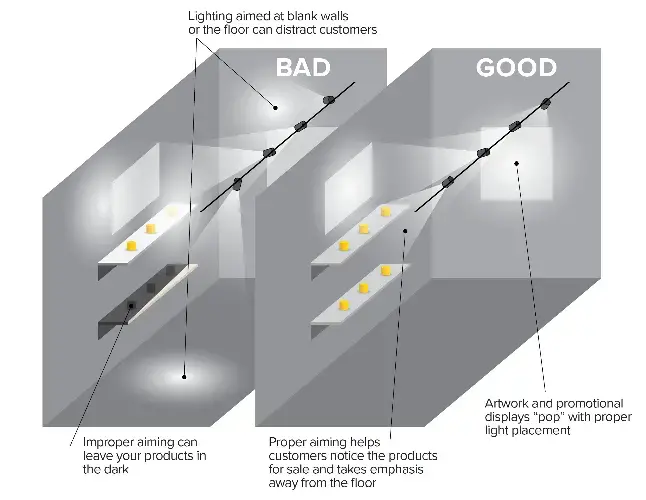
商品から注意をそらす不適切な照明と、視覚的マーチャンダイジングを向上させるためにディスプレイやアートワークを強調する効果的な照明を並べて示したイラスト。.
- 垂直照明 → グレア
- ビームの重なり → ホットスポット
- 間隔が広すぎる → 暗いゾーン
- ビーム角が不適切 → 照明が不均一
結果:手戻り増加とディスプレイ性能の低下
実例:天井高3mの小売店レイアウト

- グリッド間隔:1.2–1.5m
- ビーム角:24°–36°
- Tilt: 30°–40°
Result:
- ~1200 lux average
- Uniformity >0.8
Validated using DIALux evo
To ensure stable lighting performance, it is also important to consider ちらつき そして dimming compatibility in LED systems.
Best Practices for Retail Spotlight Positioning
- Use angled lighting (30°–45°)
- Match beam angle to display width
- Maintain 3:1 contrast ratio
- Avoid direct overhead lighting
- Use high CRI + adequate R9
These principles apply across most retail environments
結論
Effective 小売スポットライト配置 combines:
- correct angles
- proper beam selection
- controlled spacing
- high-quality light
For most projects:
30°–45° angle + 24°–36° beam = optimal retail lighting solution
Free Retail Lighting Simulation for Your Project
Worried about delays caused by on-site adjustments?
Our engineering team provides:
- Dialux-based 3D lighting simulations
- Pre-calculated spotlight layouts
- Verified lux and uniformity results