電子トランスとは?動作原理、LED互換性、MR16アプリケーション
最終更新日:2026年3月3日
電子トランスは、低電圧照明システム、特にMR16ハロゲンランプやLEDランプに広く使用されています。しかし、多くの設置者や購入者はその動作原理、そしてより重要な点として、いつ使用すべきか、あるいは使用すべきでないかを誤解しています。.
このガイドでは以下を説明します:
- 電子トランスとは何か
- 動作原理(高周波スイッチング原理)
- 電子トランスと磁気トランスの違い
- LED互換性のリスク
- 最小負荷要件
- 調光に関する考慮事項
- 関連する安全基準
低電圧照明を指定または設置する場合、これらの要因を理解することで、ちらつき、過熱、早期故障を防ぐことができます。.
電子トランスとは何か?

白色の筐体に収められたTECO電子トランスで、モデル情報、6〜30Wの定格電力範囲、および複数の安全・適合マーキングが表示されています。.
アン 電子トランス は、照明用途のために電源電圧(通常110Vまたは220V AC)を低電圧(一般的に12V AC)に降圧する高周波電力変換装置です。.
従来の磁気トランスとは異なり、電子トランスは高いスイッチング周波数(通常20kHz~40kHz)で動作するため、小型・軽量化が可能です。.
国際電気標準会議(IEC)によると、照明システムで使用されるトランスは、以下のような安全基準に準拠しなければなりません。 IEC 61558(トランス、リアクトル、電源装置の安全性)
出典: https://webstore.iec.ch/publication/6109
電子トランスはどのように動作するのか?
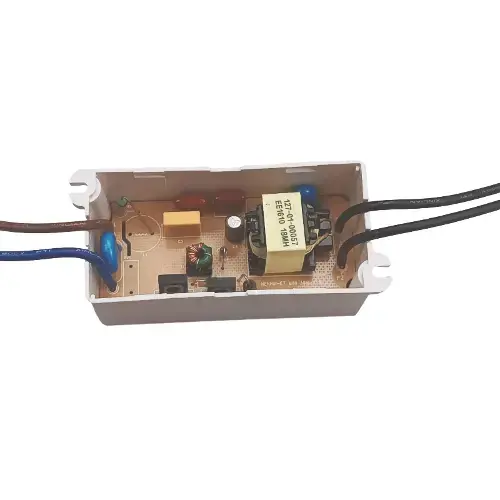
白色ハウジング内の開放型電子モジュール。LEDドライバー用途に使用されるPCB部品(トランス、コンデンサ、抵抗、配線など)を示しています。.
電子トランスは、重い鉄心の代わりに高周波スイッチング回路を使用します。.
基本的な動作ステップ:
- AC電源はDCに整流されます。.
- 直流は高周波(数十kHz)でスイッチングされます。.
- 小さなフェライトトランスが電圧を降圧します。.
- 出力はハロゲンランプに適した低電圧ACを供給します。.
高周波で動作するため、トランスのコアは従来の50/60Hz磁気トランスよりも大幅に小型化できます。.
高周波が重要な理由
- 小型サイズ
- 軽量
- 高効率
- 材料使用量の削減
しかし、高周波は互換性の問題、特にLED負荷において引き起こすことがあります。.
電子トランスと磁気トランス:主な違い
| 特徴 | 電子トランス | 磁気トランス |
|---|---|---|
| 動作周波数 | 20~40 kHz | 50/60 Hz |
| サイズと重量 | コンパクトかつ軽量 | より大きく、より重い |
| 最小負荷要件 | はい | 通常は不可 |
| 効率性 | より高い | 中程度 |
| LED互換性 | 限定的(デザインによる) | より安定していることが多い |
| 調光互換性 | 調光器タイプに適合する必要あり | より許容範囲が広い |
磁気トランスは積層鉄心を使用し、電源周波数で直接動作します。重いですが、低ワット数のLED負荷に対してより許容性があることが多いです。.
Electronic Transformer vs LED Driver (Important Distinction)
Many people confuse electronic transformers with LED drivers.
They are NOT the same.
| パラメータ | 電子トランス | LEDドライバー |
|---|---|---|
| Output Type | 12V AC | DC (Constant Current or Constant Voltage) |
| Designed For | Halogen lamps | LED |
| Load Sensitivity | 高い | Controlled |
| Flicker Risk with LED | Common | Minimal (if quality driver) |
Most electronic transformers were originally designed for halogen MR16 lamps — not LED retrofits.
For LED installations, a dedicated LED driver is generally the more stable solution.
Reference: U.S. Department of Energy – LED Driver Reliability
https://www.energy.gov/eere/ssl/led-driver-reliability
Minimum Load Requirement (Critical Issue)
One of the most common causes of flicker is the minimum load requirement.
Electronic transformers often specify a load range, for example:
20W – 60W
If the connected LED load is below the minimum threshold, the transformer may:
- フリッカー
- Shut down intermittently
- Produce audible noise
- Overheat
Halogen lamps naturally meet minimum load requirements. LED replacements often do not.
This is why replacing 50W halogen MR16 with 5W LED MR16 can cause instability when using old electronic transformers.
Why Do MR16 LEDs Flicker with Electronic Transformers?
Common causes:
- Insufficient load
- 非互換な調光器
- High-frequency interference
- Non-stabilized output waveform
- Transformer designed for resistive load (halogen), not electronic load (LED)
IEEE Std 1789-2015 discusses flicker and modulation risks in lighting systems.
出典: https://ieeexplore.ieee.org/document/7118618
Applications of Electronic Transformers
Electronic transformers are still widely used in:
- MR16 halogen track lighting
- Recessed low-voltage fixtures
- Display lighting
- Landscape lighting
- Retail accent lighting
They are suitable when:
- Load meets minimum requirement
- Halogen lamps are used
- Compatible dimmers are installed
調光互換性
Electronic transformers require compatible phase-cut dimmers.
Two main types:
- リーディングエッジ(TRIAC)
- Trailing-edge (ELV)
Using the wrong dimmer can cause:
- Buzzing
- フリッカー
- 調光範囲が限られている
Dimming compatibility must be verified at system level — transformer + lamp + dimmer.
When Should You Use an Electronic Transformer?
Use electronic transformer when:
✔ Operating halogen MR16 lamps
✔ Load meets minimum wattage
✔ Weight and size are critical
✔ Proper dimmer compatibility confirmed
Avoid electronic transformer when:
✘ Using low-wattage LED MR16 retrofits
✘ Deep dimming required
✘ Load varies frequently
✘ Stability is critical (hospitality / retail premium display)
In LED projects, constant-current or constant-voltage LED drivers are typically more reliable.
Safety & Compliance Considerations
Electronic transformers used in lighting systems should comply with:
- IEC 61558 (Transformer Safety)
- EN 61347 (Lamp Controlgear)
- Local electrical codes
Improper transformer selection can result in:
- Overheating
- Reduced lamp lifespan
- Electrical noise
- Safety risks
Frequently Asked Questions (FAQ)
Can I use an electronic transformer with LED MR16?
Sometimes, but only if:
- The LED load meets minimum requirement
- The LED is labeled “electronic transformer compatible”
- Dimming system is verified
Otherwise, an LED driver is safer.
What is the difference between electronic and magnetic transformers?
Electronic transformers operate at high frequency and are compact. Magnetic transformers operate at mains frequency and are heavier but often more stable with LED loads.
Why does my 12V LED flicker after replacing halogen?
Likely due to:
- Minimum load mismatch
- Dimming incompatibility
- High-frequency waveform instability
Are electronic transformers more efficient?
Generally yes, due to high-frequency operation and reduced core losses.
結論
Electronic transformers revolutionized low-voltage lighting by reducing size and improving efficiency. However, they were originally designed for halogen loads.
When used with modern LED retrofits, compatibility must be carefully evaluated — especially minimum load, dimming type, and waveform stability.
Understanding the difference between electronic transformers, magnetic transformers, and LED drivers is essential for reliable lighting system design.
Need Help Choosing the Right Power Solution?
If you are specifying MR16, GU10, or low-voltage LED lighting for commercial or retail projects, selecting the correct power solution is critical.
Teco supports B2B buyers with:
- MR16 compatible LED drivers
- Electronic transformer compatibility guidance
- Dimming system verification
- Engineering support before mass deployment
Tell us your load type, wattage, and dimming requirements.
We’ll help you choose a solution that works in the field — not just on paper.
ウェブサイト: https://www.tecolite.com
メール: [email protected]