B2B照明の信頼性における認証の基盤としての重要性
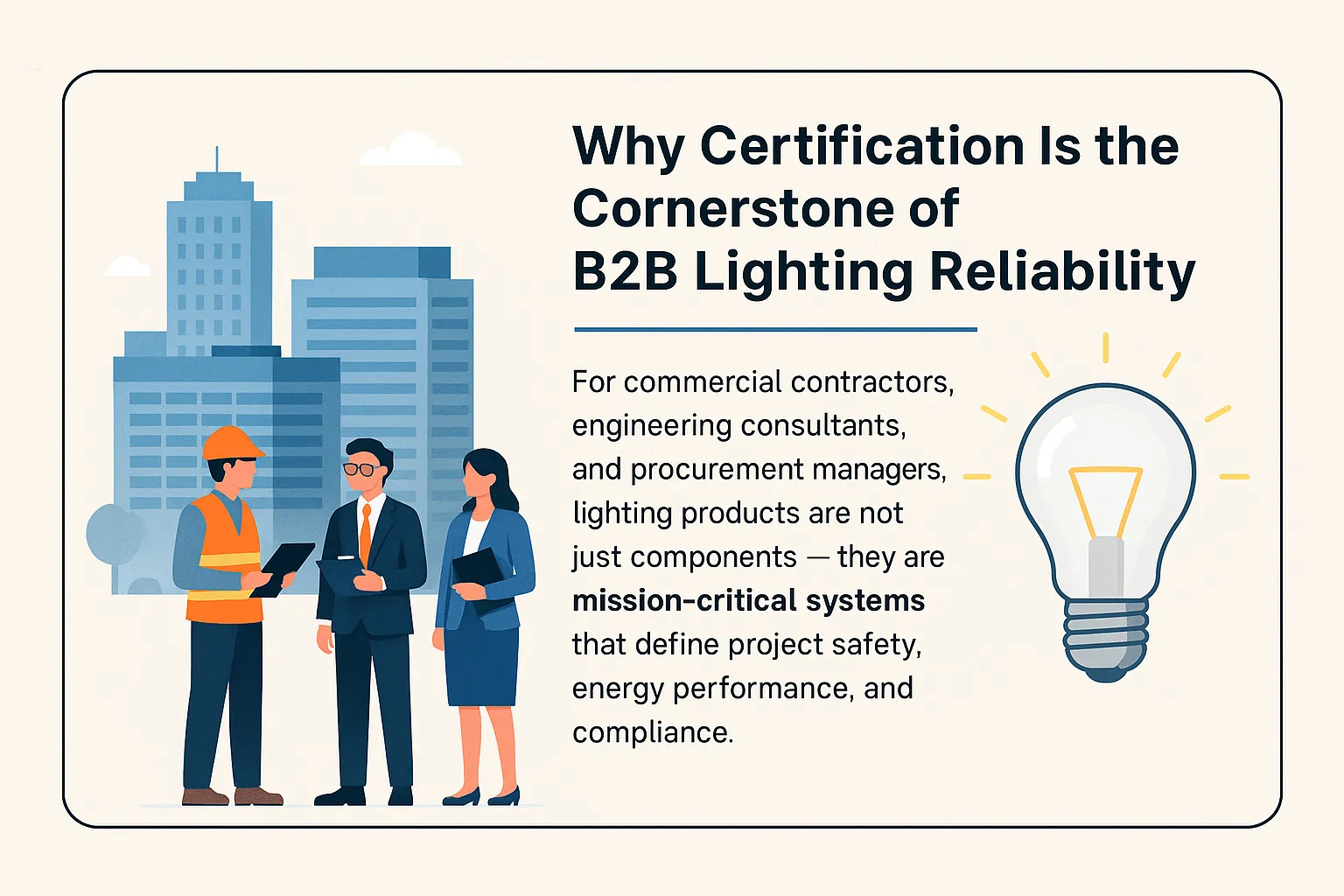
商業請負業者、エンジニアリングコンサルタント、および調達管理者にとって、照明製品は単なる部品ではありません。それらは ミッションクリティカルシステム プロジェクトの安全性、エネルギー性能、コンプライアンスを定義する規格。.
によると 国際エネルギー機関(IEA、2024年), 、中国は現在 世界のLED照明製品の80%, 、年間数十億単位を輸出しています。しかし、サプライヤー間で製品品質と適合性は大きく異なります。.
B2B環境では、プロジェクトが数百万ドルを超えることが多いため、未認証のLED電球は検査の失敗、保証に関する紛争、および評判の損害を引き起こす可能性があります。.
具体例: ドバイでの大規模なホテル改修プロジェクトでは、非認証電球の出荷がSASOのエネルギー効率検査に不合格となり、数か月遅延しました。再設置費用はプロジェクト総予算の15%を超えました。.
教訓: 認証は単なる書類作業ではありません。それは 戦略的保護策 技術的リスク、規制上の罰則、顧客不満に対する対策。.
LED認証の真の意味を理解する
認証と適合性の違い

しばしば同義語として使用されますが、これらの用語には明確な意味の違いがあります:
- 認証: 本製品は、認定機関(例:TÜV、UL、Intertek)による独立試験および承認を受けています。.
- 適合性: 製造元 主張 基準を満たしているが、第三者検証を欠く場合があります。.
認証発行機関
世界的に認められた認証・試験機関には以下が含まれます:
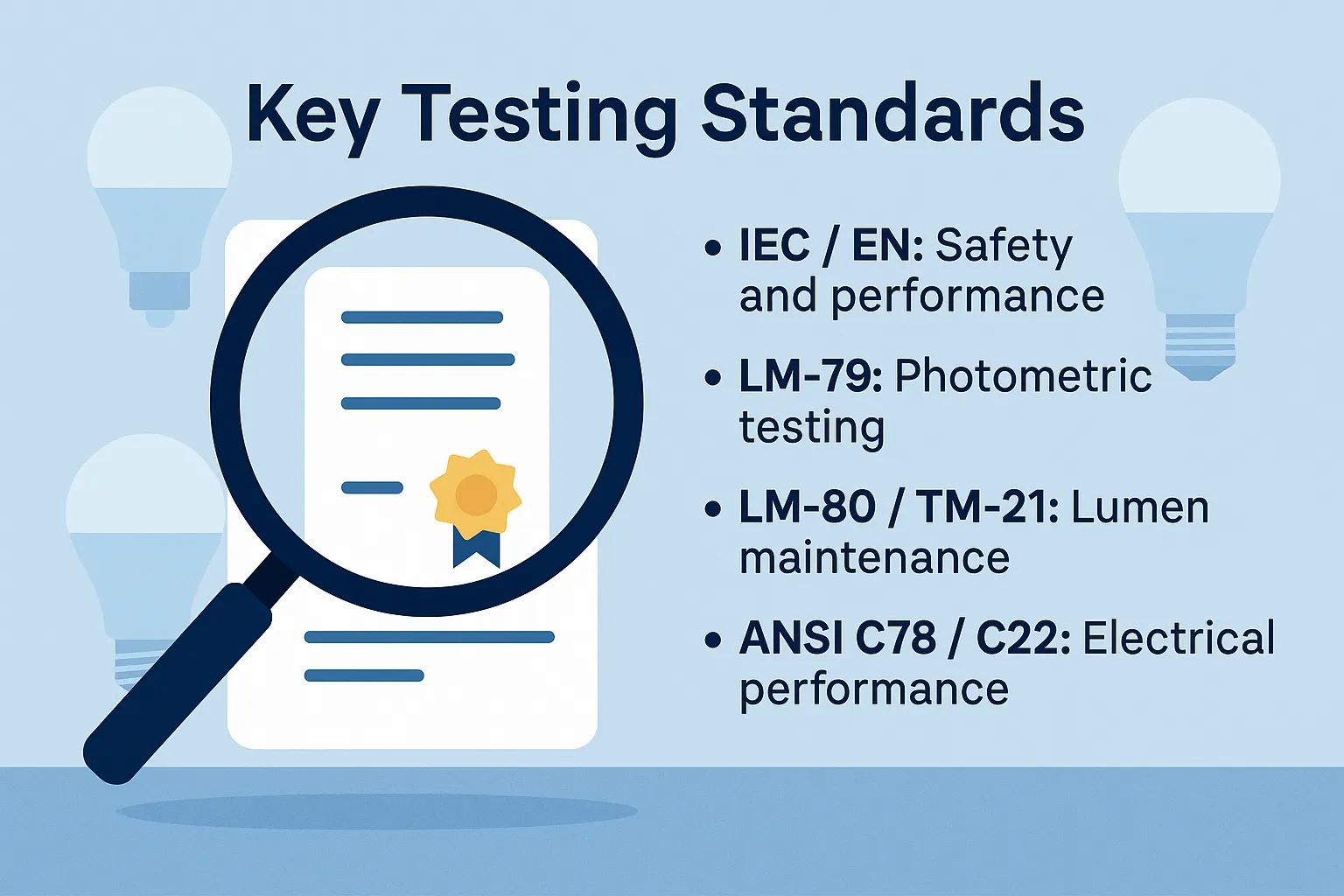
主要な試験基準
- IEC / EN規格: 世界的に認められた安全性と性能の基準。.
- LM-79: LEDランプの光束、効率、色度試験。.
- LM-80 / TM-21: ルーメン維持率と寿命予測。.
- ANSI C78 / C82: 北米における電気的および測光性能基準。.
(出典: 米国エネルギー省 – 固体照明プログラム)
地域によって異なる試験基準と認証詳細の理解
国際市場に参入するため、信頼性の高いLED電球メーカーは以下に準拠する必要があります 特定の指令と試験基準 地域によって異なります。.
1. CEマーク(ヨーロッパおよび英国)
LVD — 低電圧指令 (2014/35/EU)
50〜1000V ACで動作する機器の電気的安全性を確保します。.
試験項目:
- 絶縁抵抗および絶縁耐力
- 感電保護
- 異常条件下での温度上昇
- 火炎および火災危険試験(グローワイヤ、ニードルフレーム)
参照規格:
- EN/IEC 62560 (自己安定形LEDランプの安全性)
- EN 60529 (IP保護)
- EN/IEC 62471 (光生物学的安全性)
EMC指令(2014/30/EU)
電気機器間の干渉を防止します。.
主要試験:
- エミッション: EN 55015 / CISPR 15
- 高調波: EN 61000-3-2(クラスC照明機器)
- フリッカー/電圧変動: EN 61000-3-3
- イミュニティ: EN/IEC 61547
RoHS(2011/65/EU + 2015/863)
鉛、カドミウム、水銀などの有害物質を制限します。.
製造者は以下を提供する必要があります 適合宣言 そして 材料試験報告書.
(参照: 欧州委員会RoHS指令)
エコデザインおよびエネルギーラベル(EU 2019/2020およびEU 2019/2015)
最小エネルギー性能および製品情報要件を定義します。.
主要試験:
- 発光効率と待機電力
- 寿命と光束維持率
- フリッカー(Pst LM)およびストロボ効果(SVM)
- 登録先 EPRELデータベース
2. 北米: UL / ETL / FCC
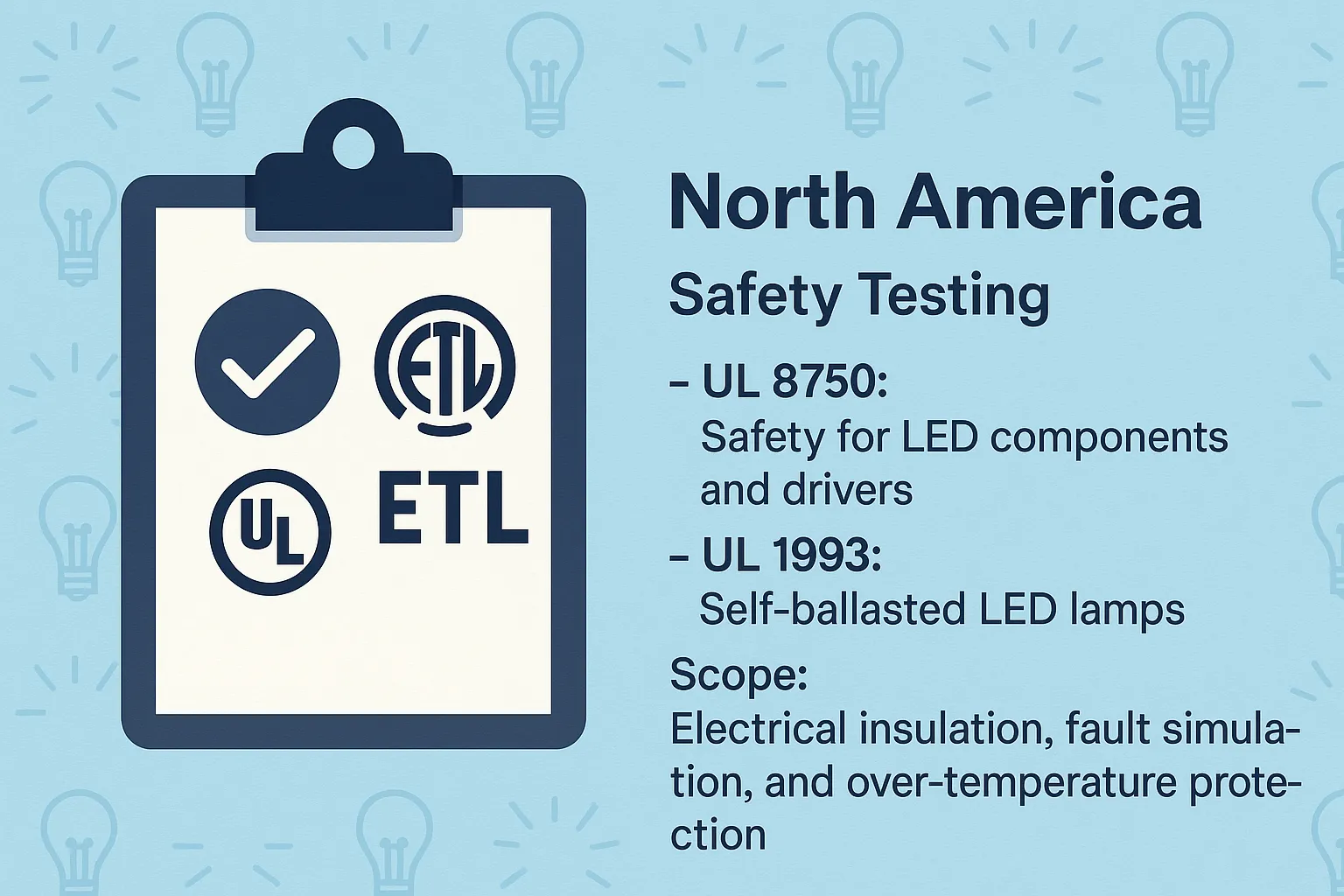
UL / ETL 安全試験
- UL 8750: LEDコンポーネントおよびドライバーの安全性
UL 1993: 自己安定形LEDランプ
- 適用範囲: 電気絶縁、故障シミュレーション、過熱保護
- 真正性を確認する UL製品iQデータベース
FCC Part 15 (Subpart B)
- クラスB(住宅用)照明機器の電磁放射を規制
- 試験方法:ANSI C63.4に基づく伝導エミッションおよび放射エミッション
(参照: FCC Part 15規則)
性能基準
- IES LM-79 — 完全な照明器具の測光試験
- IES LM-80 / TM-21 — LEDチップのルーメン維持率と寿命予測
3. 中東: SASO & G-Mark
SASOエネルギー効率と安全性
- SASO 2902 — 照明製品のエネルギー効率、光学性能、安全性
- 通関およびプロジェクト入札資格に必要
G-Mark (Gulf Conformity Mark)
- 発行元: GCC標準化機構 (GSO)
- 対象範囲 低電圧 そして EMC 統一された湾岸規制に基づくコンプライアンス
ヒント: 湾岸地域の入札では、二重適合を確保 — CBレポート + SASO登録 — 港の通関問題を回避するため.
4. オーストラリア & ニュージーランド: RCMおよびAS/NZS規格
RCM (Regulatory Compliance Mark)
- 以下の規格への適合を表します 電気安全(EESS) そして EMC (ACMA) フレームワーク
- サプライヤーは国家データベースに登録されている必要があります
AS/NZS 62560:2017
- IEC 62560に基づき、現地の電圧および安全環境に適合
- CISPR 15と組み合わせたEMCエミッションテスト
5. ISO品質・環境マネジメントシステム
- ISO 9001 – 品質管理
- ISO 14001 – 環境管理
- ISO 45001 – 労働安全衛生
(出典: ISO公式サイト)
エンジニアリングの視点:
認証されたメーカーは、これらの基準をSMT生産からエージングテスト、出荷トレーサビリティまでの全工程に統合し、ロット間で一貫した信頼性を確保しています。.
信頼できるLED電球メーカーが提供すべき主要認証
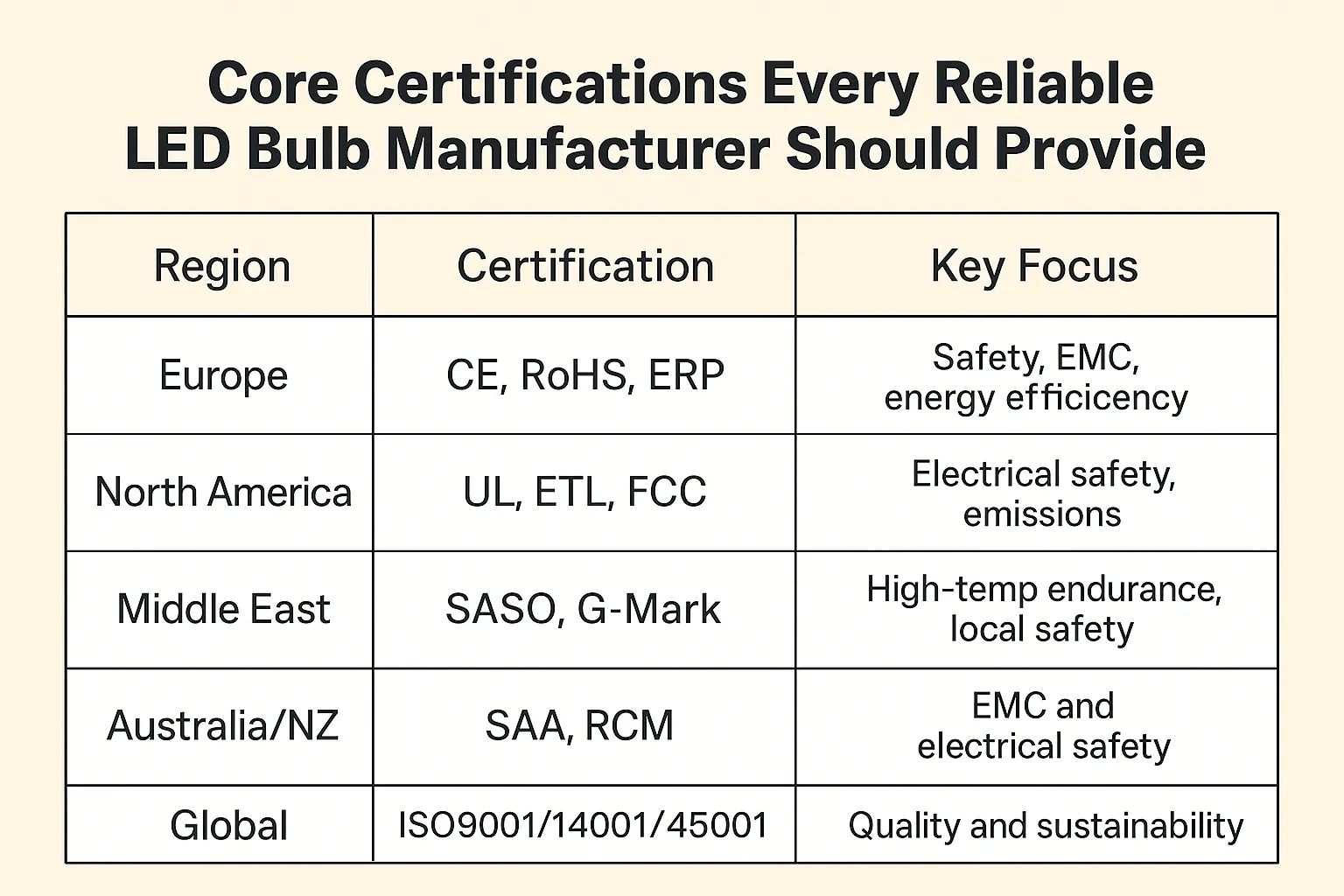 | 地域 | 認証 | 重点項目 |
|---|---|---|---|
| ヨーロッパ | CE、RoHS、ERP | 安全性、EMC、エネルギー効率 | |
| 北米 | UL、ETL、FCC | 電気安全、エミッション | |
| 中東 | SASO、G-Mark | 高温耐久性、現地の安全性 | |
| オーストラリア/NZ | SAA、RCM | EMCおよび電気安全 | |
| グローバル | ISO9001/14001/45001 | 品質と持続可能性 |
信頼できるサプライヤーは 文書を積極的に共有する レポート、試験所名、証明書の有効期限を含む試験プロセスを詳細に説明する。.
B2Bバイヤーが認証の真正性を確認する方法
構造化された検証プロセスがコンプライアンスの整合性を確保する。.
確認チェックリスト:
- 証明書を以下の条件で要求する シリアル番号と発行機関の詳細.
- 公式データベース(例:TÜV、UL、SASO)を通じて真正性を確認してください。.
- 確認する 有効期限と適用範囲.
- 要求する LM-79 / LM-80 / TM-21 レポート 元の試験所ロゴ付き。.
- 確認する 会社名が営業許可証と一致していること.
- 出荷前に第三者検査機関(SGS、QIMA、またはIntertek)を利用します。.
- 「共有」証明書や検証不可能なPDFは拒否してください。.
(参照: TÜV Rheinland Certipediaデータベース)
製造成熟度の指標としての認証
信頼できるLED電球メーカーは、すべてのレベルでコンプライアンスを統合しています:
- 自動SMT実装とAOI光学検査
- EMC、温度、サージ試験用の社内試験所
- バッチトレーサビリティのためのERPシステム
- ISO9001に基づく文書化された内部監査
として LightingEuropeのコンプライアンスレポート(2024年) 注記、社内認証システムを持つメーカーの経験 40% 保証請求が少ない そして製品の一貫性が大幅に向上します。.
一般的な落とし穴と危険信号
以下のようなサプライヤーは避けてください:
- 使用 偽のCEまたはULロゴ 有効なIDなし。.
- LED電球に関連しない証明書を提供する。.
- 試験書類なしで超低価格を提供する。.
- ビデオ監査や第三者検証は拒否してください。.
- として運営する メーカーを装うトレーダー.
プロのヒント: 実施する 出荷前検査(PSI) — 大きな損失を防ぐ小さなコストです。.
認証がROIとプロジェクト成功に与える影響
認証照明はプロジェクトの成果を直接向上させます:
- 35% 長寿命 平均して(DOE SSLレポート、2024年)
- 10~15%の保証コスト削減
- 入札資格の向上 政府およびESGプロジェクトにおいて
- メンテナンス労力の削減, 、総所有コスト(TCO)の改善
認証は単なるコンプライアンスだけでなく、 事業継続性 複数年にわたるプロジェクト向け。.
グローバルLED認証の新興トレンド
LED適合性の次段階は スマートで持続可能かつデジタルな検証.
1. スマート照明プロトコル
- DALI-2, 、Zigbee、Bluetooth Meshは相互運用性認証が必須となりました。.
2. ESGとカーボンフットプリント検証
- ISO 50001(エネルギー管理)および ライフサイクルアセスメント(LCA) グリーン調達で標準化されつつあります。.
3. デジタル製品パスポート(DPP)
- の下で導入された EU持続可能な製品規制のためのエコデザイン(2024年), 、各照明製品に追跡可能なデジタルIDを義務付け。.
4. 循環経済対応準備
メーカーはリサイクル可能な材料と包装を採用することが期待されており、 欧州グリーンディール.
結論:戦略的投資としての認証
B2B調達チームやエンジニアリング企業にとって、認証は単なるコンプライアンスのチェックボックス以上のものです — それは 信頼性と専門性の戦略的保証.
認証済みLED電球メーカーが示すもの:
- グローバル市場対応力
- 透明性のある品質管理
- エンジニアリングの一貫性
- 持続可能な生産プラクティス
認定サプライヤーとの提携はリスクを軽減するだけでなく、ブランドの信頼性を高め、すべてのプロジェクトが仕様通り、期限内に、国際基準に則って納品されることを保証します。.