Última atualização: 19 de março de 2026
Introdução: Escolher a CCT Correta é uma Decisão de Negócio
Em projetos de iluminação comercial, a seleção da temperatura de cor não é apenas uma preferência de design — afeta diretamente experiência do cliente, produtividade e desempenho geral do projeto.
Uma especificação incorreta de CCT pode resultar em:
- Apresentação comercial deficiente
- Ambientes de escritório desconfortáveis
- Iluminação inconsistente em grandes instalações
Este guia concentra-se em como selecionar a temperatura de cor LED correta para espaços comerciais, com base em cenários de aplicação reais e não em comparações simples.
O que é Temperatura de Cor do LED (CCT)?
Temperatura de Cor Correlacionada (CCT) descreve a aparência visual da luz branca, medida em Kelvin (K).
- CCT mais baixa → luz mais quente e suave
- CCT mais alta → luz mais fria e brilhante
Em ambientes comerciais, a CCT influencia diretamente:
- Clareza visual
- Aparência do material
- Perceção do espaço
- Conforto do utilizador
Gamas de Iluminação Comercial: 3000K, 4000K e 5000K

Na maioria dos projetos comerciais, são utilizadas três gamas principais de CCT:
| Gama de CCT | Efeito visual | Uso Comercial Típico |
|---|---|---|
| 3000K | Quente, convidativo | Hotelaria, retalho de boutique |
| 4000K | Neutra, equilibrada | Escritórios, supermercados |
| 5000K | Brilhante, alto contraste | Armazéns, industrial |
Em vez de perguntar “qual é melhor”, a abordagem correta é:
Qual CCT se alinha com a função do seu projeto?
Melhor Temperatura de Cor LED por Aplicação Comercial
Ambientes de Escritório
Recomendado: 4000K
- Apoia o foco e a produtividade
- Fornece iluminação equilibrada e confortável
- Alinha-se com os padrões modernos do local de trabalho
Em alguns mercados (especialmente na América do Norte), 3500K também é usado como uma opção equilibrada entre calor e clareza.
Lojas de Retalho
Recomendado: 3000K–4000K
- 3000K realça o calor e a experiência do cliente
4000K melhora a visibilidade do produto
Muitos ambientes de retalho combinam ambos para um design de iluminação em camadas
Importante:
Em ambientes de retalho, color rendering is as important as color temperature.
- Recommended: CRI (Ra) ≥ 90
- Ensures products appear vivid and true-to-color
Even with correct CCT, low CRI lighting can make merchandise look dull or low-quality.
Hospitality Spaces (Hotels & Restaurants)
Recommended: 2700K–3000K
- Creates a relaxing and welcoming atmosphere
Enhances guest comfort and perception
Higher CCT levels should generally be avoided, as they may feel overly clinical
Warehouses and Industrial Facilities
Recommended: 5000K
- Provides strong brightness and contrast
- Improves operational visibility and safety
However, in customer-facing commercial spaces, 5000K should be used cautiously, as it may feel too harsh depending on the environment.
Healthcare and Educational Spaces
Recommended: 3500K–5000K
- Balanced lighting supports both comfort and accuracy
- Suitable for task-oriented environments
For these applications, high CRI lighting (Ra ≥ 90) is recommended to improve visual accuracy and reduce eye strain.
How to Select the Right CCT for Commercial Projects
1. Define the Function of the Space
Determine whether the space is:
- Customer-facing
- Task-driven
- Multi-functional
2. Evaluate Materials and Interior Design
CCT interacts with:
- Finishes (wood, metal, fabric)
- Product colors
Surface reflectivity
Always test lighting samples in real environments
3. Consider User Experience
Lighting should support:
- Comfort
- Visibility
- Intended atmosphere
4. Verify Standards and Consistency
For commercial projects, ensure:
- ANSI C78.377 bin consistency
- Compliance with EN 12464-1
Fixed CCT vs Tunable White Systems
Fixed CCT Lighting
Best for:
- Standard commercial projects
- Large-scale installations
Advantages:
- Stable chromaticity
- Lower cost
- Simple installation
Tunable White Lighting
Best for:
- Escritórios
- Retail showrooms
- Multi-purpose environments
Advantages:
- Adjustable color temperature
- Flexible lighting scenes
- Future-proof system design
CCT-Selectable Lighting (3CCT Switchable)
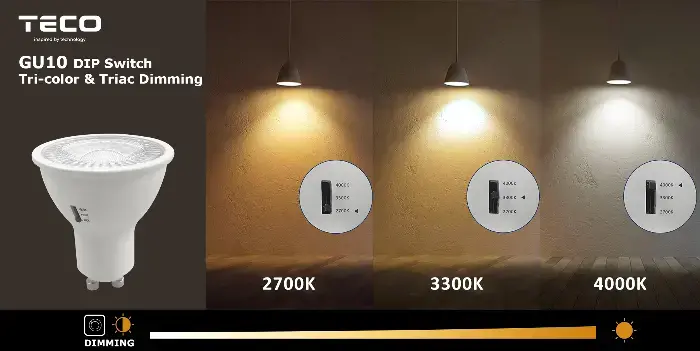
In many commercial projects, contractors increasingly prefer CCT-selectable fixtures (e.g., 3000K / 4000K / 5000K in one product).
This solution offers:
- Reduced inventory complexity
- Greater flexibility during installation
- Lower risk of incorrect CCT selection
It is especially useful for:
- Retail chain rollouts
- Renovation projects
- Multi-region distribution
However, for projects requiring strict visual consistency, fixed CCT with controlled binning remains the preferred solution.
Common Mistakes in Commercial Color Temperature Selection
1. Using High CCT in Customer-Facing Areas
→ Creates harsh and uncomfortable environments
2. Mixing Inconsistent CCT Bins
→ Leads to visible color mismatch across fixtures
3. Focusing Only on CCT
→ Ignoring CRI, glare control, and illuminance
4. Using a Single CCT Across All Areas
→ Reduces lighting effectiveness and spatial layering
When to Use Each CCT (Quick Commercial Reference)
- 3000K → Atmosphere-driven environments
- 4000K → Balanced commercial spaces
5000K → High-visibility, task-critical areas
In many commercial projects, combining multiple CCT layers delivers the best results
Related Guide for Residential Applications
Commercial and residential lighting require different approaches.
For home lighting decisions, refer to:
3000K vs 4000K for Home Lighting (Living Room, Kitchen & Bedroom Guide)
Business Impact of Proper CCT Selection
Correct LED color temperature selection can:
- Improve customer experience
- Enhance retail presentation
- Increase workplace productivity
- Reduce project errors and revisions
For B2B buyers, this results in:
- More reliable project delivery
- Higher client satisfaction
- Reduced after-sales issues
Conclusão
Selecting the right LED color temperature for commercial spaces is a strategic decision that impacts both performance and perception.
Rather than focusing on simple comparisons, project stakeholders should:
- Match CCT with space function
- Consider user experience and material interaction
- Ensure consistency and compliance
A well-planned CCT strategy leads to better lighting outcomes and long-term project success.
Recomendação de Engenharia B2B
For commercial lighting projects, always verify:
- CCT consistency (ANSI binning)
- CRI performance (preferably Ra ≥ 90 for critical areas)
- Application-specific requirements
If flexibility is required, consider:
- Multi-CCT (3CCT) products
- Tunable white systems
- Custom project-based solutions