
O Que É Iluminação Amiga do Sono? Um Guia Prático para Quartos e Hotéis
Summary:
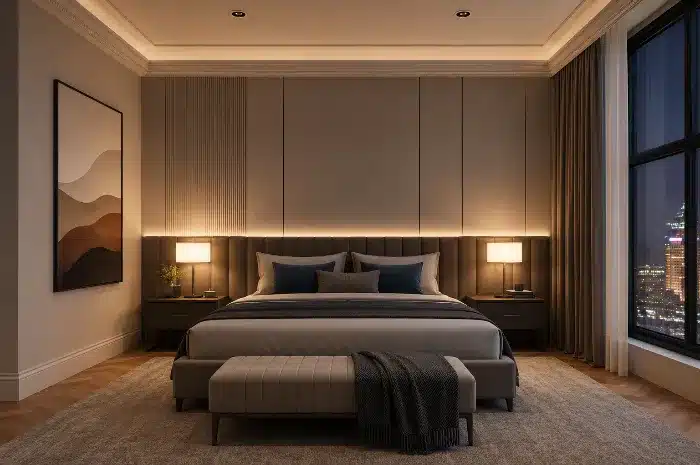
Sleep-friendly lighting is not simply warm white lighting. A better design considers light spectrum, blue-light exposure, circadian response, dimming stability, flicker control, glare, color rendering, and how the space is used at night. For bedrooms, hotels, lounges, corridors, and wellness-style interiors, ultra-warm and low-blue-light lighting can help create a softer and calmer evening environment.
Hotel bedroom with soft ultra-warm lighting
Why Is Sleep-Friendly Lighting More Than Warm White?
Many people think sleep-friendly lighting simply means choosing a warm white lamp. This is only partly true.
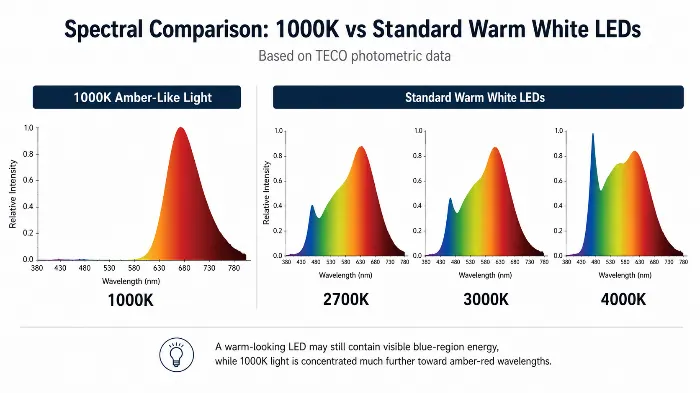
A 2700K or 3000K LED lamp may look warm to the human eye, but the actual spectrum can still contain a strong blue energy peak. This is common in many standard phosphor-converted LED lamps, where a blue LED chip is used as the base light source and phosphor is used to create the final white light.
That means a lamp can look yellowish or warm while still containing blue-rich energy that may not be ideal for evening or night-time spaces.
Professional sleep-friendly lighting should not be judged only by visible color temperature. It should also consider spectrum control, blue-light reduction, dimming stability, flicker, glare, color rendering, and the time of use.
The key question is not only:
“Is the light warm?”
A better question is:
“Does this lighting design reduce unnecessary night-time stimulation while still providing enough visual comfort for real spaces?”
How Does Light Affect Circadian Rhythm?
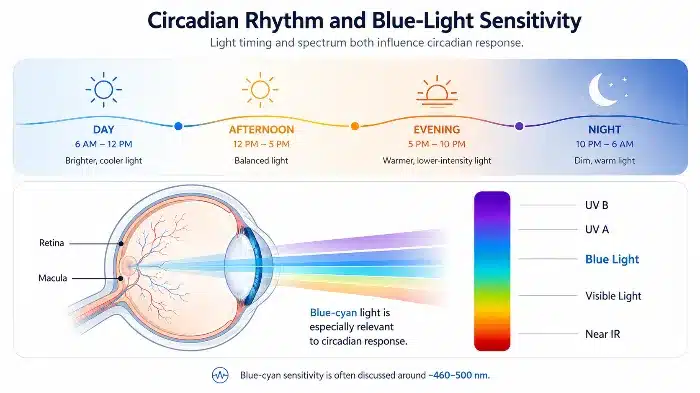
Human beings follow a 24-hour biological rhythm, often called the circadian rhythm. Light is one of the main external signals that helps the body distinguish day from night.
During the day, brighter and cooler light can support alertness and activity. At night, however, strong blue-rich light may send a daytime-like signal to the body. This is why lighting for bedrooms, hotel rooms, lounges, and night-time corridors should not be designed in the same way as office or retail task lighting.
One important concept is melatonin suppression. Certain wavelengths of light can stimulate the retina and affect the body’s natural preparation for rest. This does not mean all light at night is bad. It means evening lighting should be softer, warmer, lower in intensity, and lower in blue-rich energy.
Another important concept is melanopsin. Melanopsin-sensitive retinal cells are especially responsive to blue light around 440–460 nm. This range is closely related to circadian stimulation. For sleep-friendly lighting, spectrum design matters more than visible warmth alone.
Educational graphic showing circadian rhythm and blue-light sensitivity
Why Does the 450 nm Blue Peak Matter?
One common problem with ordinary warm white LED lamps is the blue pump around 450 nm.
A lamp may look warm because the final mixed light has a low color temperature. However, if the 450 nm blue peak remains strong, the light may still create more biological stimulation than expected during evening use.
For professional buyers, this is where the difference between marketing and engineering becomes clear. A basic warm white lamp may only change the visible color appearance. A more serious sleep-friendly lighting product should focus on spectrum control and reducing unnecessary short-wavelength blue energy in night-time scenes.
For hotels, wellness projects, senior living spaces, and high-end residential interiors, spectrum data can be more useful than broad marketing words such as “healthy light” or “better sleep light.”
Spectrum comparison between standard warm white LED and 1000K amber-like light
What Role Does 1000K Light Play in Night-Time Spaces?
1000K light is much warmer than standard residential or commercial lighting. It is closer to amber light or candlelight than normal white light.
This kind of light is useful when the goal is not high brightness, but a calm night-time atmosphere. It can help create a soft visual environment for evening scenes, bedside areas, hotel rooms, corridors, lounges, restaurants, bars, and relaxation-focused interiors.
A 1000K light source is not meant to replace all general lighting. It works better as a night scene, wind-down mode, ambience light, or part of a wider human-centric lighting plan.
For example, a hotel room may still need normal warm white lighting for cleaning, reading, or daily use. But when the guest wants a softer night mode, a 1000K ultra-warm light can create a calmer atmosphere than standard white lighting.
For project buyers, the value of 1000K is not only its warm appearance. It can serve as a dedicated night-scene light source within a layered lighting design, especially when the project needs both normal functional lighting and a separate low-stimulation evening mode.
Why Is Deep Dimming Important?
Sleep-friendly lighting is not only about color temperature. Brightness control is just as important.
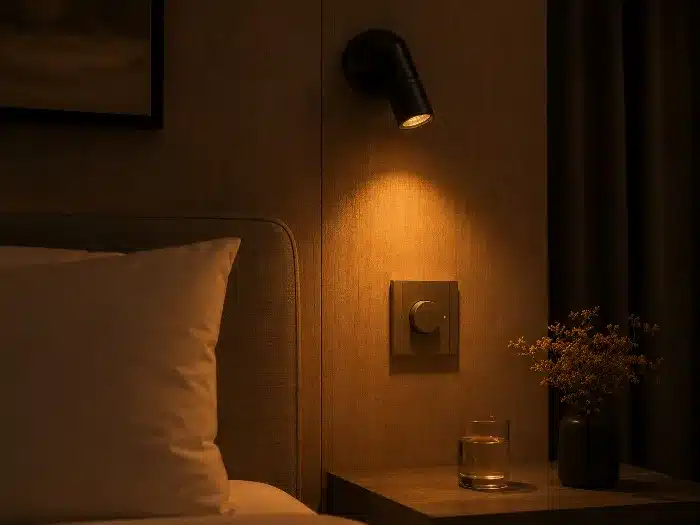
A lamp may have the right warm color, but if it cannot dim low enough, the room may still feel too bright at night. High-quality sleep-friendly lighting often requires very low brightness levels, sometimes down to 1% or even 0.1%, while still keeping the light stable.
This is where many lighting systems fail.
At low brightness levels, poor dimming may cause visible flicker, invisible flicker, low-frequency ripple, buzzing noise, unstable output, or sudden brightness jumps. These problems become more obvious in bedrooms and hotel rooms because people are more sensitive to light quality in dark environments.
This is why “dimmable” is not enough as a product claim. Buyers should also care about dimming depth, dimmer compatibility, driver quality, and low-brightness stability.
Why Does Flicker-Free Performance Matter?
Flicker is another important factor in sleep-friendly lighting.
Some flicker is visible, but some is not easy to see with the eye. Even invisible flicker may still cause discomfort for some users during long-term exposure, especially in low-brightness scenes.
A professional sleep-friendly lighting design should reduce flicker risk through better driver design and proper dimming control. High-frequency or analog dimming methods are often used to improve stability, especially at low brightness levels.
For B2B projects, “flicker-free” should not be used as a casual marketing word. If the project is sensitive, buyers should ask for flicker test data, dimmer compatibility information, or actual project testing.
For bedrooms, hotels, serviced apartments, and wellness spaces, stable low-level dimming can be more important than maximum brightness.
Stable dimming scene for bedroom lighting
Is Amber or Red Light Better for Night Lighting?
Amber and red LED technologies are often used for night lighting because they naturally contain less blue-rich energy than higher-CCT white light.
However, there is a trade-off.
Pure red or amber light can reduce blue-light stimulation, but it may also distort color appearance. A room lit only by narrow-spectrum red or amber light can feel unnatural. It may not be suitable for reading, dressing, cleaning, hospitality rooms, or daily use.
This is why sleep-friendly lighting needs balance.
The goal is not only to reduce blue light. The light also needs to remain usable. Color rendering still matters. In practical spaces, especially bedrooms and hotels, CRI, TM-30, R9 performance, and overall spectrum balance can help maintain a more natural visual experience.
A good night-time lamp should look warm, feel soft, and still allow people to see the space comfortably.
What Technical Features Should Buyers Check?
Sleep-friendly lighting should be selected with measurable criteria, not vague wellness language. The following checklist can help project buyers compare products more professionally.
| Buyer Checkpoint | Por Que É Importante | Recommended Evidence |
|---|---|---|
| Spectrum Control | A warm-looking lamp may still contain blue-rich energy. | Spectrum report or low-blue-light design explanation |
| 450 nm Blue Peak | Standard LED blue pumps may remain active even when the light looks warm. | Blue peak comparison or spectral distribution data |
| Melanopsin Sensitivity | The 440–460 nm range is closely related to circadian stimulation. | Melanopic-related metrics or M/P Ratio if available |
| Ultra-Warm CCT | Very warm light helps create a calmer night-time ambience. | 1000K, 1800K, amber-like, or similar ultra-warm CCT options |
| Deep Dimming | Night scenes often require very low brightness levels. | Stable 1% or 0.1% dimming capability if required by the project |
| Flicker Control | Poor dimming may cause visual discomfort. | Flicker test data or compatible dimmer list |
| Controlo do Reflexo | Harsh direct glare is uncomfortable in bedrooms and night-use spaces. | Suitable optics, recessed fixtures, diffusers, or indirect lighting design |
| Color Rendering | Extremely warm light may distort colors. | CRI, TM-30, R9, or other color quality data |
| Photobiological Safety | Professional projects may require safety evidence. | IEC/EN 62471 or RG0 documentation if available |
| Project Verification | B2B buyers need proof, not broad health claims. | Spectrum reports, dimming tests, M/P Ratio, or project mock-up testing |
Where Is Sleep-Friendly Lighting Most Useful?
Sleep-friendly lighting is not needed everywhere. It is most valuable in spaces used during evening or night hours.
Why Do Bedrooms Need Softer Night Lighting?
Bedrooms need warm, low-intensity lighting for pre-sleep routines, bedside use, and night-time movement. A strong white light may feel too stimulating, especially when used before rest or during the night.
A sleep-friendly bedroom lighting design should avoid direct glare, excessive brightness, and strong blue-rich light. It should create a soft environment while still allowing basic visibility.
Why Are Hotels Suitable for Sleep-Friendly Lighting?
Hotels are one of the strongest application areas for sleep-friendly lighting.
A hotel room needs different lighting scenes: cleaning mode, reading mode, general warm lighting, bathroom lighting, and night mode. The night mode should feel calm, premium, and comfortable, without making the room completely dark.
Ultra-warm low-blue-light lighting can help create a more comfortable guest experience, especially in bedrooms, bedside zones, corridors, lounges, and wellness-style hotel areas.
How About Corridors and Night-Time Circulation Areas?
Corridors and circulation areas need visibility, but not necessarily high brightness at night.
For hotels, serviced apartments, senior living spaces, and residential projects, low-intensity warm lighting can support gentle wayfinding. The goal is to help people move safely without exposing them to harsh white light.
This is also where glare control becomes important. A lamp with the right CCT may still feel uncomfortable if the fixture creates direct glare.
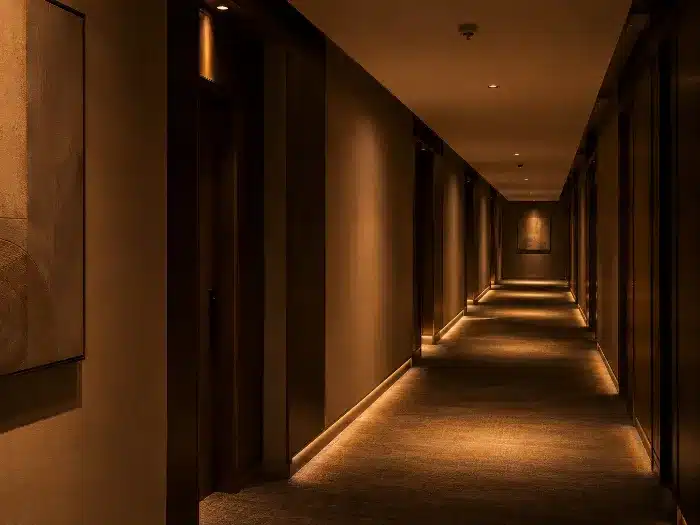
Corridor or hotel night mode lighting with low-intensity warm light
How Is Sleep-Friendly Lighting Different from Dim-to-Warm?
Dim-to-Warm lighting changes color temperature as brightness is reduced. It is useful for hospitality, residential, and restaurant lighting because it creates a warmer atmosphere at lower brightness.
But Dim-to-Warm is not automatically sleep-friendly.
A Dim-to-Warm product may still contain blue-rich energy depending on the LED design. It may also have poor dimming stability at low brightness.
Sleep-friendly lighting goes further. It considers spectrum design, melanopsin response, blue-light reduction, deep dimming, flicker control, glare control, color rendering, and measurable evidence.
In simple terms:
Dim-to-Warm is a lighting effect. Sleep-friendly lighting is a design strategy.
A complete sleep-friendly lighting solution may include Dim-to-Warm, amber light, low-blue-light spectrum design, deep dimming, smart schedules, indirect lighting, and glare-controlled fixtures.
How Can 1000K GU10 Bulbs Fit into Sleep-Friendly Lighting Design?
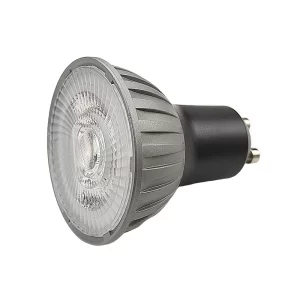
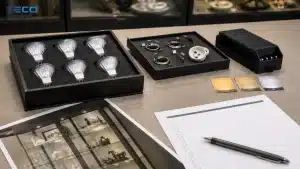
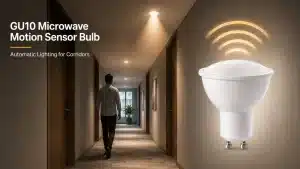
For projects that already use GU10 fixtures, a 1000K GU10 bulb can be a practical way to introduce ultra-warm night-time lighting without redesigning the entire fixture system.
Instead of replacing the whole lighting layout, project buyers can use 1000K GU10 bulbs in selected night-use zones, such as bedrooms, hotel rooms, corridors, bedside areas, lounges, or relaxation spaces.
This type of product is especially useful when the project needs a replaceable lamp format, ultra-warm night ambience, compatible GU10 fixtures, dimming control, usable color rendering, multiple beam angle options, and lower-maintenance LED performance.
For product-specific selection, TECO provides a dedicated GU10 1000K amber LED bulb for projects that need ultra-warm ambience in a replaceable GU10 format. Detailed parameters such as CCT, luminous flux, dimming type, beam angle, and compatibility should be checked on the product page or confirmed with the TECO team before project specification.
What Mistakes Should Buyers Avoid?
Sleep-friendly lighting is becoming a popular topic, but the market also contains vague and exaggerated claims. Buyers should be cautious when a product only uses emotional words without technical explanation.
Avoid products that only claim:
“better sleep”
“healthy light”
“wellness lighting”
“low blue light”
“flicker-free”
“human-centric”
These terms are not enough by themselves. A stronger product description should explain the engineering basis behind the claim.
Buyers should ask:
What is the CCT?
Is there spectrum data?
Is the blue peak reduced?
What dimming method is used?
Does it dim stably at low brightness?
Is there flicker data?
What is the CRI or TM-30 result?
Is there M/P Ratio data?
Is IEC/EN 62471 photobiological safety information available?
This approach helps separate real lighting engineering from vague marketing language.
How Should Sleep-Friendly Lighting Be Specified for B2B Projects?
For lighting brands, distributors, hotels, contractors, and project buyers, sleep-friendly lighting should be specified as a combination of product performance and application design.
A good specification may include:
intended application area
CCT or spectrum requirement
blue-light reduction target
dimming depth
flicker requirement
glare control method
ângulo do feixe
color rendering requirement
fixture compatibility
safety or testing documentation
This is especially important for hotels, senior living projects, wellness spaces, and high-end residential interiors where comfort and reliability matter.
Sleep-friendly lighting is not just about one lamp. It is a complete design approach that combines light source, driver, dimmer, fixture, optics, layout, and user behavior.
Conclusion: What Makes Lighting Truly Sleep-Friendly?
Sleep-friendly lighting is not the same as ordinary warm white lighting. It is a more complete approach that combines photobiology, spectrum control, dimming quality, flicker control, glare reduction, color rendering, and measurable evidence.
For night-time spaces such as bedrooms, hotels, lounges, corridors, wellness rooms, restaurants, and serviced apartments, ultra-warm low-blue-light lighting can help create a softer and calmer visual environment.
A 1000K GU10 LED bulb can be a practical part of this strategy when the project needs a replaceable GU10 format, ultra-warm ambience, dimming compatibility, and comfortable night-time lighting.
The strongest sleep-friendly lighting products are not the ones with the loudest health claims. They are the ones that can explain their spectrum, dimming performance, color quality, application value, and supporting evidence clearly.
Need support for hotel, bedroom, or wellness lighting projects? Contact TECO to discuss GU10 amber lighting options, spectrum data, dimmer compatibility, sample testing, and project selection requirements.
FAQ
Is sleep-friendly lighting the same as warm white lighting?
No. Warm white lighting usually refers to visible color temperature, such as 2700K or 3000K. Sleep-friendly lighting considers more factors, including spectrum, blue-light content, dimming quality, glare, flicker, and application timing.
Why is 1000K useful for night lighting?
1000K light is closer to amber or candlelight than standard white light. It can create a softer, lower-intensity night-time ambience for bedrooms, hotels, lounges, and relaxation areas.
Can sleep-friendly lighting improve sleep?
It should not be described as a medical treatment or guaranteed sleep solution. A better and safer description is that sleep-friendly lighting helps create a lower-stimulation evening environment by reducing harsh brightness and blue-rich light.
Why does melanopsin matter?
Melanopsin-sensitive retinal cells respond strongly to blue light around 440–460 nm. This is why sleep-friendly lighting should consider spectrum design, not only visible warmth.
What should buyers check before choosing a sleep-friendly lamp?
Buyers should check spectrum design, CCT, blue-light reduction, dimming depth, flicker performance, glare control, CRI or TM-30 data, M/P Ratio if available, and IEC/EN 62471 photobiological safety information.
References
CIE S 026 provides a framework for melanopic lighting metrics: https://files.cie.co.at/CIE_S_026_Tutorial2021_information.pdf
Harvard Health discusses the relationship between blue light exposure and sleep: https://www.health.harvard.edu/healthy-aging-and-longevity/blue-light-has-a-dark-side
NIH / PMC explains melanopsin and non-visual light effects: https://pmc.ncbi.nlm.nih.gov/articles/PMC4699304/
IEC 62471 is commonly used for photobiological safety evaluation: https://webstore.iec.ch/en/publication/7076

 English
 French
 German
 Italian
 Spanish
 Portuguese
 Arabic
 Russian
 Japanese
 Chinese