Введение
Для производителей светодиодов, импортёров и подрядчиков проектов, Соответствие ErP не является опциональным — это законодательное требование для выхода на рынок ЕС.
Несоблюдение может привести к:
- отказ в таможенном оформлении груза
- задержки проектов в гостиничных и коммерческих установках
- дорогостоящая переработка и повторное тестирование
- юридическая ответственность импортеров
Реальный случай:
Поставщик осветительного оборудования не завершил регистрацию в EPREL.
Результат: партия светодиодной продукции на сумму 50 000 евро была задержана в немецком порту более чем на 3 недели.
Ключевой вопрос:
Может ли ваше светодиодное изделие законно выйти на рынок ЕС?
Контрольный список соответствия ErP (проверено по SLR и ELR)
| Требование | Правовая основа | Требование соответствия | Источник |
|---|---|---|---|
| Энергоэффективность (потребляемая мощность в рабочем режиме) | SLR (ЕС) 2019/2020 | Pon ≤ Ponmax, рассчитывается с использованием Φuse, CRI и поправочных коэффициентов | Регламент (ЕС) 2019/2020 |
| Классификация энергетической маркировки | ELR (ЕС) 2019/2015 | Энергетический класс A–G на основе ηTM (лм/Вт) | Регламент (ЕС) 2019/2015 |
| Потребляемая мощность в режиме ожидания (Psb, Pnet) | SLR (ЕС) 2019/2020 | Обычно ≤0,5 Вт (зависит от типа изделия) | Регламент (ЕС) 2019/2020 |
| Мерцание (Pst LM) | SLR (ЕС) 2019/2020 | Pst LM ≤1,0 | Регламент (ЕС) 2019/2020 |
| Стробоскопический эффект (SVM) | SLR (ЕС) 2019/2020 | SVM ≤0,4 | Регламент (ЕС) 2019/2020 |
| Функциональные требования (срок службы, переключение, поддержание светового потока) | SLR (ЕС) 2019/2020 | Должен соответствовать критериям долговечности и производительности, определенным в приложении | Регламент (ЕС) 2019/2020 |
| Регистрация в EPREL | ELR (ЕС) 2019/2015 | Продукт должен быть зарегистрирован перед размещением на рынке ЕС | База данных EPREL |
| Техническая документация | Директива ErP 2009/125/EC | Должен храниться в течение 10 лет | Директива 2009/125/EC |
| Маркировка CE | Несколько директив (LVD, EMC, RoHS) | Требуется до выхода на рынок | Знак соответствия CE ЕС |
Если какой-либо пункт не выполнен, ваше изделие не может продаваться в ЕС.
Какие регламенты действительно применяются (SLR и ELR)
Рамочная директива ErP (2009/125/EC) реализуется через:
- (ЕС) 2019/2020 — Единый регламент по освещению (SLR)
- (ЕС) 2019/2015 — Регламент энергетической маркировки (ELR)
Официальные источники:
Основная концепция
- SLR (ErP) → определяет минимальные технические характеристики
- ELR (Энергетическая маркировка) → определяет класс энергоэффективности (A–G)
Вы должны пройти Сначала SLR перед нанесением маркировки ELR.
Реальность энергетической маркировки ЕС
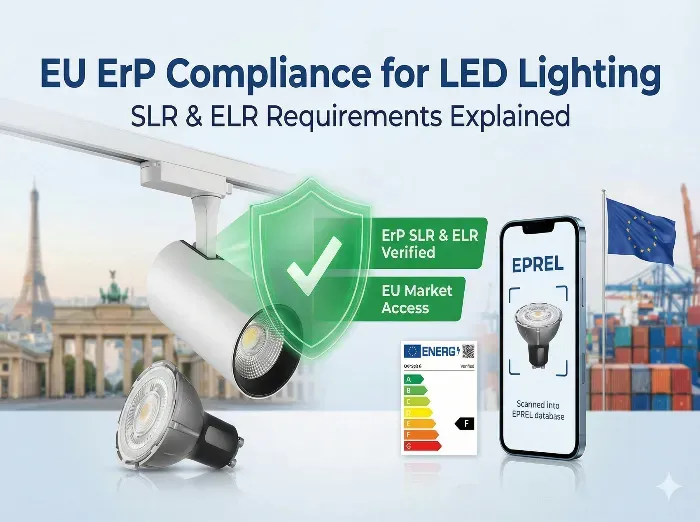
Ключевой отраслевой факт
Большинство соответствующих светодиодных продуктов сегодня находятся между Класс D–F.
- Класс A (>210 лм/Вт) → крайне редок
- Класс B–C → премиальная продукция
- Класс D–F → массовые соответствующие продукты
Не отклоняйте продукцию только из-за того, что она не относится к классу A.
Ключевые технические требования ErP
Ключевые параметры производительности (регуляторные + рыночные ориентиры)
| Параметр | Требование | Тип | Важное примечание |
|---|---|---|---|
| Световая отдача | Не фиксировано (на основе ηTM по SLR ЕС) | Нормативные требования | Нельзя упрощать до порога лм/Вт |
| Потребляемая мощность в режиме ожидания (Psb) | ≤0,5 Вт (≤2,0 Вт в режиме ожидания сети) | Нормативные требования | Важно для интеллектуального / подключенного освещения |
| Пожизненная | 15 000–25 000 ч (типично L70B50) | Рынок | Не является обязательным требованием ЕС |
| CRI (Ra) | ≥80 (общее освещение) | Нормативные требования | ≥90 рекомендуется для розничной торговли |
| Pst LM | ≤1,0 | Нормативные требования | Кратковременное мерцание |
| SVM | ≤0,4 | Нормативные требования | Безопасность стробоскопического эффекта |
Как рассчитать световую отдачу светодиода
Для проверки соответствия эффективность должна рассчитываться как:
Световая отдача (η) = Общий световой поток (лм) / Потребляемая мощность (Вт)Пример
- 900 лм / 10 Вт = 90 лм/Вт → ПРОХОДИТ
- 800 лм / 10 Вт = 80 лм/Вт → НЕ ПРОЙДЕНО
Это одна из самых частых причин провала проверок в ЕС.
Минимальная световая отдача по типам продуктов (рыночный ориентир, не регуляторный лимит)
| Тип продукта | Типичный рыночный диапазон (лм/Вт) | Ключевые влияющие факторы |
|---|---|---|
| Non-directional lamps | 90–130 lm/W | Thermal design, driver efficiency |
| Directional lamps (GU10) | 70–110 lm/W | Beam angle, optical losses |
| High-output lamps | 110–160+ lm/W | Power level, heat dissipation |
Always verify category-specific requirements before testing.
Why Flicker Metrics Matter
- Pst LM → visible flicker
- SVM → motion distortion
These are frequent failure points in EU compliance audits.
Recommended internal link:
(Почему мерцают диммируемые светодиодные споты?)
Common Reasons LED Products Fail ErP Compliance
❌ Low Efficiency (<85 lm/W)
- outdated LED chips
- poor optical design
❌ High Standby Power (>0.5 W)
- inefficient drivers
- leakage in dimming circuits
❌ Missing EPREL Registration
- product not in EU database
- automatic customs rejection
❌ Incomplete Technical Documentation
- missing test reports
- no Declaration of Conformity
❌ Thermal Mismatch (Ta vs Real Use)
- tested at 25°C
- installed at 40°C+
leads to real-world failure
Manufacturer Insight
Over 60% of ErP failures are caused by documentation—not product performance.
EPREL Registration: What You Actually Need
EPREL database:
https://eprel.ec.europa.eu
Required Data
- product datasheet
- energy label parameters
- test reports (efficacy, power, flicker)
- supplier account (EU-based)
Critical Rule
EPREL registration must be completed before placing the product on the EU market
How to Achieve ErP Compliance
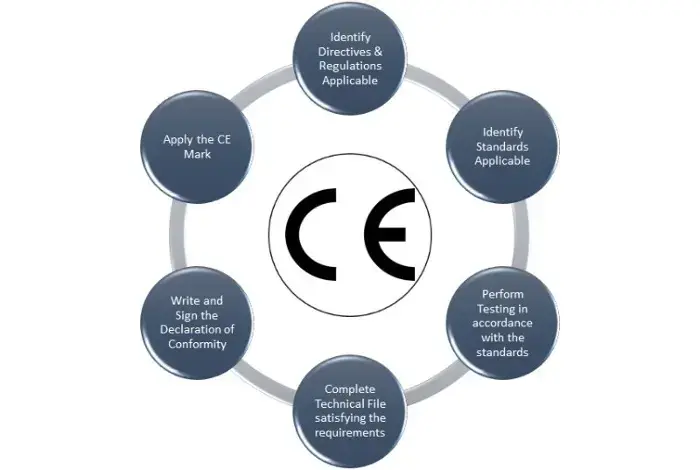
Diagram illustrating the step-by-step procedure for obtaining CE marking certification, with the CE logo at the center surrounded by key compliance activities such as testing and documentation.
Step 1: Identify Product Scope
- determine lamp vs luminaire
- confirm SLR applicability
Step 2: Perform Laboratory Testing
- efficacy
- standby power
- flicker (Pst LM / SVM)
- lifetime (LM-80 / TM-21)
Step 3: Verify Against SLR Limits
- compare results with thresholds
Step 4: Prepare Technical File
- test reports
- drawings
- risk assessment
- Декларация соответствия
Step 5: Register in EPREL
- upload product data
- generate energy label
Step 6: Apply CE Marking
- confirm compliance
- prepare for inspection
Manufacturer vs Importer Responsibilities
| Role | Responsibility | Risk |
|---|---|---|
| Manufacturer | Design, testing, documentation | Production halt |
| Importer | Verify compliance, keep files (10 yrs) | Import ban / fines |
Ключевое правило
The importer is legally responsible for placing compliant products on the EU market.
Compliant vs Non-Compliant LED Products
| Aspect | Compliant Product | Non-Compliant Product |
|---|---|---|
| Customs | Pass | Rejected |
| EPREL | Registered | Missing |
| Производительность | Проверено | Unstable |
| Legal Risk | Низкий | Высокий |
Critical Engineering Factors
Ambient Temperature (Ta)
Performance is valid only under defined Ta conditions.
If exceeded:
- lumen output drops
- lifetime shortens
L70B50 Meaning
- L70 → 70% lumen maintenance
- B50 → 50% population
Industry standard = L70B50
Recommended internal link:
(Insert your L70 article)
System vs Component
- LM-80 → LED chip only
Real system includes:
- driver
- thermal design
- optics
Final Compliance Checklist
✔ ≥85 lm/W efficacy
✔ ≤0.5W standby power
✔ Pst LM ≤1.0
✔ SVM ≤0.4
✔ ≥25,000h (L70B50)
✔ EPREL registered
✔ CE marked
✔ documents stored for 10 years
ЧАСТО ЗАДАВАЕМЫЕ ВОПРОСЫ
What is ErP compliance for LED?
ErP compliance ensures LED products meet EU efficiency and environmental requirements for legal sale.
Can I sell LED lights in the EU without ErP?
No. Non-compliant products will be rejected or banned.
What is EPREL registration?
EPREL is the EU database for energy-labelled products required before market entry.
What are the most common failures?
Low efficacy, high standby power, missing EPREL registration, and incomplete documentation.
Заключение
ErP compliance is not just a technical requirement—it is a market access gatekeeper.
Failure leads to:
- shipment rejection
- financial loss
- project delays
Compliance ensures legal entry, stable performance, and long-term business reliability.
Get Your Product EU-Ready Before Shipping
Avoid:
- customs rejection
- project delays
- compliance penalties
We support:
- SLR compliance verification
- Регистрация в EPREL
- full technical file preparation