Быстрый ответ: 24° против 36° — что лучше?

- угол луча 24° → более высокая интенсивность, направленное освещение, сильный контраст
- Луч 36° → шире охват, лучше равномерность, меньше светильников
При высоте 3 м, 36° охватывает ~50–70% больше площади чем 24°
Заключение:
Использовать 24° для акцентного освещения, и 36° для общего освещения в большинстве коммерческих проектов.
Ключевые выводы
- 24° = высокая освещенность + сильная фокусировка
- 36° = широкое покрытие + лучшая равномерность
- 24° улучшает видимость товара
- 36° уменьшает количество светильников
- Смешивание обоих дает лучшие результаты
Почему 24° и 36° — самые используемые углы луча
Реальность на месте
В коммерческих помещениях (розничная торговля, гостиничный бизнес):
- высота потолков обычно варьируется 2,5–4 м
- время установки ограничено
поставки должны быть стандартизированы
24° и 36° — самые практичные и широко доступные варианты.
Техническое объяснение
Согласно классификации лучей IES:
- 24° → точечный луч (<30°)
36° → узкий заливной свет (30–40°)
Ссылка:
https://www.ies.org/standards/
Эти углы обеспечивают оптимальный баланс между:
- интенсивность света
- площадь покрытия
- гибкость расстояния
Прямая перспектива от производителя
В крупных гостиничных проектах:
- более 60% заказов 24° или 36°
- из-за совместимости с трековыми системами и регуляторами затемнения
24° против 36°: ключевые различия вкратце
| Характеристика | Угол луча 24° | Угол луча 36° |
|---|---|---|
| Распространение луча | Узкий | Средний |
| Интенсивность освещения (люкс) | Высокий | Средний |
| Охват | Малый | Большой |
| Однородность | Ниже | Выше |
| Количество светильников | Ещё | Меньше |
| Лучшее применение | Акцентное освещение | Общее освещение |
Качество тени: ключевое визуальное различие
Угол луча влияет не только на яркость—но и как выглядят объекты.
- угол луча 24° → резкие, чёткие тени
- Луч 36° → мягкие, рассеянные тени
Практический эффект:
- 24° → идеально для украшения, часы, текстурированные материалы
36° → лучше подходит для одежда, гостиничный бизнес, фоновое освещение
Ключевой вывод:
Узкие лучи создают глубину и контраст, а более широкие лучи улучшают визуальный комфорт.
Формула диаметра луча (Инструмент проектирования)
Расчёт ширины луча
Ширина луча = 2 × высота установки × tan(угол луча ÷ 2)
Пример (потолок 3м)
- 24° → ~1,27м диаметр
36° → ~1,95 м диаметр
36° обеспечивает значительно большую зону покрытия.
Справка (фотометрические испытания):
https://www.ies.org/standards/lm-79/
Сравнение рассеивания луча (разница в охвате)
| Высота | Охват 24° | Зона покрытия 36° |
|---|---|---|
| 2,5м | ~1,06м | ~1,62м |
| 3 м | ~1,27 м | ~1,95 м |
Ключевой вывод:
Небольшие изменения угла луча создают большие различия в распределении света.
Сравнение освещенности: Какая ярче?

При одинаковом световом потоке:
- 24° → концентрация → большая освещённость
- 36° → рассеивание → меньшая освещённость
Пример (800лм @ 3м)
- 24° → ~1800 люкс
- 36° → ~900 люкс
CBCP (Центральная сила свечения луча)
CBCP измеряет пиковую интенсивность в центре луча.
- 24° обычно обеспечивает 30–50% более высокий CBCP
создает более сильный визуальный акцент
В розничном освещении более высокий CBCP делает товары более чёткими и заметными.
Ссылка:
https://cie.co.at/publications
Различия в расстояниях при реальной установке
На основе рекомендаций IES:
https://www.ies.org/handbook
| Высота | Расстояние 24° | 36° Расстояние |
|---|---|---|
| 2,5м | ~2.0 м | ~3.0 м |
| 3 м | ~2.4 м | ~3,6 м |
Практический эффект:
- 36° сокращает количество светильников на 30–40%
- снижает затраты на монтаж и проводку
- улучшает общую равномерность
Внимание: Угол светового пучка vs Высота потолка
Если высота потолка превышает 3.5 м:
- Световые пучки 36° могут не обеспечить достаточную освещённость
- освещение становится плоским и недостаточно мощным
Рекомендация:
- Использовать 24° или более узкие лучи
- особенно для акцентного или вертикального освещения
Это одна из самых распространенных ошибок в коммерческих проектах.
Производитель: распространённая ошибка на практике
Во многих розничных проектах:
Клиенты выбирают Световые пучки 36° для сокращения количества светильников.
Результат:
- низкий контраст
- слабая фокусировка на продукте
- уменьшенное визуальное воздействие
Наша рекомендация:
- Использовать Световые пучки 24° для ключевых зон
- сочетать с 36° для фонового освещения
Учёт контроля бликов
- 24° лучи обычно обеспечивают лучший контроль бликов
Световые пучки 36° могут давать больше рассеянного света при плохой оптике
Высококачественная конструкция линзы имеет решающее значение.
Когда использовать угол луча 24°
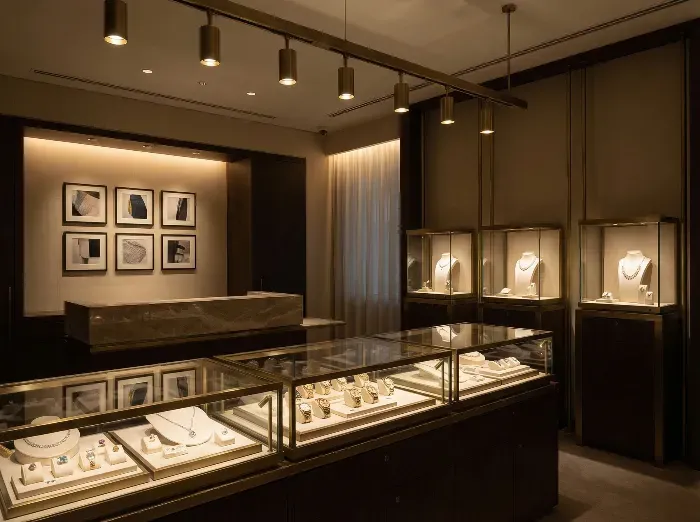
Используйте 24°, когда требуется:
- акцентное освещение
- высокий контраст
- сфокусированное освещение
Применение:
- розничные витрины
- освещение произведений искусства
- зоны ресепшен
Цель: >1000 люкс
Когда использовать угол луча 36°
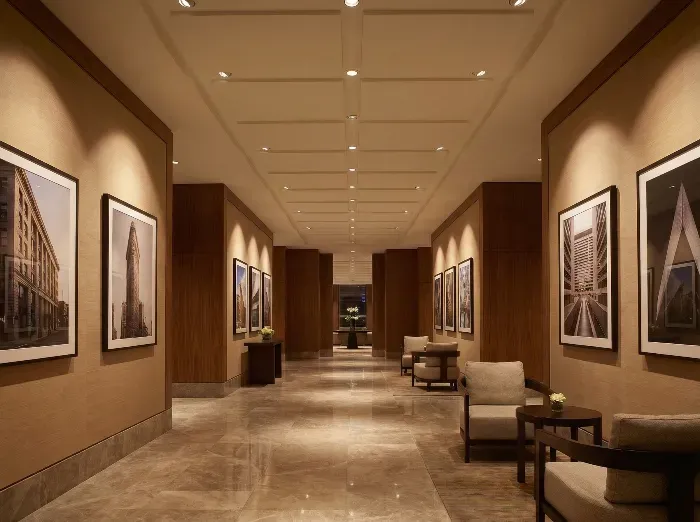
Используйте 36°, когда требуется:
- общее освещение
- равномерное распределение
- меньше светильников
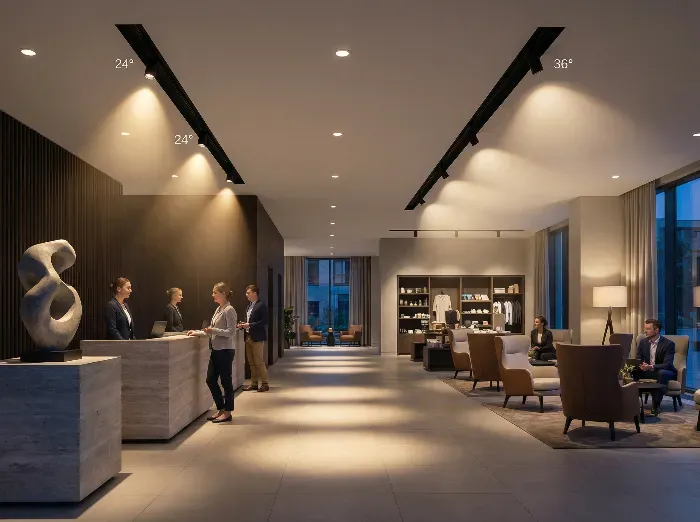
Применение:
- коридоры
- вестибюли отелей
- открытые коммерческие зоны
Цель: 500–800 люкс
Application Note (Fixture Selection)
In higher ceilings (4–6m):
- larger fixtures like AR111
- combined with угол луча 24°
provide better intensity than standard GU10 lamps.
Real Project Examples
Розничная торговля
- 24° → product focus
- 36° → background
Hotel Lobby
- 36° grid for floor
- 24° for architectural features
Галерея
- 24° for artwork
- 36° for ambient
Combining both angles delivers optimal results.
Common Mistakes When Choosing Beam Angles
- Using 36° for high ceilings
- Using only one beam angle
- Ignoring spacing rules
- Not simulating lighting
Solution:
- use Dialux / Relux
- verify beam angle before installation
FAQ: 24° vs 36° Beam Angle
Which is better for 3m ceiling?
36° for general lighting.
Is 24° too narrow?
No — ideal for accent lighting.
Can I mix 24° and 36°?
Yes — standard professional approach.
Which saves more cost?
36° reduces fixture count but may reduce lighting quality.
Inventory Strategy for Distributors
For general commercial demand:
- 60% → 36° beam (general use)
- 40% → 24° beam (accent use)
This mix:
- reduces stock risk
- covers most applications
- improves turnover
Final Recommendation: How to Choose
- Need focus → choose 24°
- Need coverage → choose 36°
- Need both → combine both
Engineering Insight
In real projects:
- mixed beam strategy reduces cost by 20–30%
- improves lighting performance
- minimizes rework
Conclusion: Business Value
Choosing the right beam angle:
- reduces installation cost
- improves lighting quality
- avoids rework
- enhances long-term performance
24° = precision lighting tool
36° = efficiency lighting tool
Planning a commercial lighting project?
Our engineering team can help you:
- select beam angles
- optimize spacing
- simulate lighting
to avoid costly mistakes before installation.