مصابيح سبوت لايت LED مقابل الهالوجين: أيهما أفضل؟
آخر تحديث في 3 مارس 2026
كانت سبوت لايت الهالوجين سابقًا المعيار للإضاءة المركزية، وعروض التجزئة، والإنارات السقفية السكنية. اليوم، تهيمن سبوت لايت LED على السوق.
لكن هل مصابيح الهالوجين أسوأ بالفعل — أم أن مصابيح LED أكثر كفاءة ببساطة؟
يقدم هذا الدليل مقارنة محايدة مدعومة بالبيانات بين سبوت لايت LED والهالوجين، متضمنًا:
- كفاءة الطاقة
- العمر التشغيلي
- جودة الضوء
- الحرارة والسلامة
- الأثر البيئي
- التكلفة الإجمالية لمدة 5 سنوات
جميع الادعاءات مدعومة بمصادر صناعية معترف بها.
مقارنة سريعة: LED مقابل الهالوجين
| ميزة | سبوت لايت LED | مصباح هالوجين |
|---|---|---|
| استهلاك الطاقة (ما يعادل GU10 النموذجي) | 6–8 واط | 50–60 واط |
| الكفاءة الإضاءية | 90–150 لومن/وات | 15–25 لومن/وات |
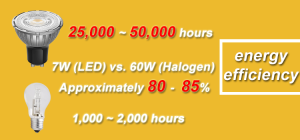
| العمر التشغيلي | 25000-50000 ساعة | 1,000–2,000 ساعة |
| إخراج الحرارة | منخفض | عالية جدًا |
| التعتيم | يتطلب سائق متوافق | تعتيم أصلي ممتاز |
| تكلفة التشغيل لمدة 5 سنوات | أقل | أعلى بكثير |
مراجع البيانات:
وزارة الطاقة الأمريكية (DOE) – أساسيات إضاءة LED
https://www.energy.gov/eere/ssl/led-lighting
مقارنة إضاءة Energy Star
https://www.energystar.gov/products/lighting_fans/light_bulbs
1. كفاءة الطاقة: ما مقدار الطاقة التي يستخدمها كل منهما؟
تولد مصابيح الهالوجين الضوء عن طريق تسخين فتيل التنجستن إلى درجات حرارة عالية (حوالي 2,500–3,000 درجة مئوية). يتم تحويل معظم الطاقة إلى حرارة بدلاً من الضوء المرئي.
تستخدم الثنائيات الباعثة للضوء (LED) ظاهرة الإضاءة الكهربائية — حيث تتحد الإلكترونات داخل مادة أشباه الموصلات لإصدار الضوء مباشرة، مع هدر حراري أقل بكثير.
وفقًا لوزارة الطاقة الأمريكية:
- تستخدم إضاءة LED طاقة أقل بنسبة 75% على الأقل من الإضاءة المتوهجة والهالوجينية.
- مصابيح LED تدوم حتى 25 مرة أطول من المصابيح التقليدية.
المصدر:
وزارة الطاقة الأمريكية – نظرة عامة على إضاءة LED
https://www.energy.gov/eere/ssl/led-lighting
من الناحية العملية:
استبدال مصباح هالوجين بقوة 50 واط بمصباح LED بقوة 7 واط يقلل من استهلاك الطاقة بنحو 85%.
2. العمر الافتراضي والصيانة
عمر الهالوجين الافتراضي:
1,000–2,000 ساعة
عمر LED الافتراضي:
25000-50000 ساعة
يؤثر هذا الاختلاف بشكل كبير على تكاليف الصيانة — خاصة في:
- بيئات البيع بالتجزئة
- مشاريع الضيافة
- High ceilings
- Commercial installations
Frequent halogen replacement increases labor cost and downtime.
Source reference:
Energy Star Product Performance Requirements
https://www.energystar.gov/products/lighting_fans/light_bulbs
3. Heat Output and Safety
Halogen bulbs operate at extremely high temperatures:
- Filament temperature: 2,500–3,000°C
- Outer glass temperature: can exceed 200–500°C
High heat increases:
- Burn risk
- Fire hazard
- HVAC load
LED spotlights operate at significantly lower surface temperatures due to higher energy conversion efficiency.
In enclosed fixtures or insulated ceilings, heat accumulation becomes a serious concern with halogen.
4. Light Quality and Color Rendering
One historical advantage of halogen bulbs:
CRI (Color Rendering Index) is naturally close to 100.
LED technology has significantly improved:
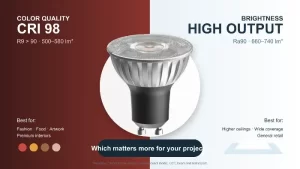
- Standard LED CRI: 80–90
- High-end LED CRI: 95+
For professional retail or hospitality projects, high-CRI LEDs now match halogen color fidelity while maintaining efficiency.
CRI definition reference:
اللجنة الدولية للإضاءة (CIE)
https://cie.co.at/
Color quality explanation:
DOE – Color Quality of Light
https://www.energy.gov/eere/ssl/color-quality
5. Environmental Impact
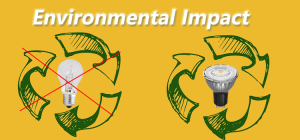
Energy consumption directly influences carbon footprint.
According to the U.S. DOE:
Switching to LED lighting in the U.S. could save hundreds of terawatt-hours of electricity annually, significantly reducing greenhouse gas emissions.
المصدر:
DOE Solid-State Lighting Report
https://www.energy.gov/eere/ssl
Additionally, the European Union has phased out many halogen lamps due to efficiency regulations.
EU Ecodesign Lighting Regulation:
https://energy-efficient-products.ec.europa.eu/ecodesign-and-energy-label/legislative-framework_en
This reflects global regulatory movement away from halogen technology.
6. 5-Year Total Cost Comparison
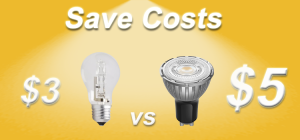
Assume:
- Daily use: 5 hours
- Electricity cost: $0.15 per kWh
Halogen (50W)
Energy use per year:
50W × 5h × 365 = 91.25 kWh
Annual energy cost ≈ $13.69
Plus multiple replacements over 5 years.
LED (7W)
Energy use per year:
7W × 5h × 365 = 12.78 kWh
Annual energy cost ≈ $1.92
Over 5 years, energy savings exceed initial price difference.
Total cost of ownership strongly favors LED.
7. When Might Halogen Still Be Used?
Despite efficiency disadvantages, halogen may still be chosen when:
- Perfect dimming curve is required
- Extremely low upfront cost is critical
- Existing legacy systems are not LED compatible
However, compatibility issues can often be resolved with proper LED driver selection.
8. Professional Recommendation Summary
For most applications in 2026:
LED spotlights offer:
- Dramatically higher efficiency
- Significantly longer lifespan
- Lower operating cost
- Reduced heat risk
- Regulatory compliance
Halogen’s primary advantage — color rendering and dimming smoothness — is now achievable with modern high-CRI dimmable LED systems.
الخلاصة
Halogen bulbs are not “bad” technology — but they are outdated in efficiency-driven environments.
For residential, retail, hospitality, and commercial projects, LED spotlights provide measurable advantages in:
- توفير الطاقة
- Maintenance reduction
- Safety
- Environmental compliance
- Long-term operating cost
Choosing between LED and halogen is no longer primarily about light quality — it is about efficiency and total lifecycle performance.
Upgrading from halogen to LED requires attention to:
- Beam angle equivalency
- Color temperature matching
- توافق مع التعتيم
- Enclosed fixture heat conditions
- Driver stability
Before large-scale retrofits, technical evaluation can prevent flicker issues, premature failure, or light distribution mismatch.
If you are planning a halogen-to-LED conversion project and require engineering guidance on:
- GU10 or MR16 replacements
- High-CRI spotlight selection
- Dimming system compatibility
- Commercial retrofit specification
Our technical team can assist with optical matching and driver evaluation to ensure smooth transition and long-term reliability.
Provide your existing fixture type, dimmer model, and project scope for professional assessment.