LED対ハロゲンスポットライト:どちらが優れているか?
最終更新日:2026年3月3日
ハロゲンスポットライトはかつて、アクセント照明、小売ディスプレイ、住宅用ダウンライトの標準でした。今日では、LEDスポットライトが市場を支配しています。.
しかし、ハロゲン電球は実際に劣っているのでしょうか?それともLEDが単により効率的なのでしょうか?
このガイドでは、LEDとハロゲンスポットライトの中立的でデータに基づく比較を提供し、以下の点をカバーしています:
- エネルギー効率
- 寿命
- 光の品質
- 熱と安全性
- 環境への影響
- 5年間総コスト
すべての主張は、業界で認められた情報源によって裏付けられています。.
簡単な比較:LED対ハロゲン
| 特徴 | LEDスポットライト | ハロゲン電球 |
|---|---|---|
| 消費電力(典型的なGU10相当) | 6〜8W | 50–60W |
| 発光効率 | 90〜150 lm/W | 15–25 lm/W |
| 寿命 | 25,000–50,000 時間 | 1,000–2,000時間 |
| 熱出力 | 低 | 非常に高い |
| 調光 | 互換性のあるドライバーが必要 | 優れたネイティブ調光 |
| 5年間の運用コスト | 低い | 著しく高い |
データ参照:
米国エネルギー省(DOE) – LED照明の基礎
https://www.energy.gov/eere/ssl/led-lighting
エネルギースター照明比較
https://www.energystar.gov/products/lighting_fans/light_bulbs
1. エネルギー効率:それぞれの消費電力は?
ハロゲン電球は、タングステンフィラメントを高温(約2,500〜3,000°C)に加熱することで光を生成します。エネルギーの大部分は可視光ではなく熱に変換されます。.
LEDはエレクトロルミネセンスを利用します。半導体材料内で電子が再結合し、熱の無駄を大幅に減らして直接光を発します。.
米国エネルギー省によると:
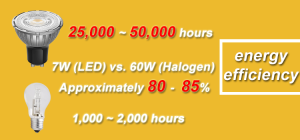
- LED照明は使用します 少なくとも75%少ないエネルギー 白熱灯やハロゲン照明よりも。.
- LEDの寿命 最大25倍長持ち 従来の電球よりも。.
出典:
DOE – LED照明概要
https://www.energy.gov/eere/ssl/led-lighting
実際には:
50Wのハロゲンスポットライトを7WのLEDに交換すると、エネルギー消費量は約85%削減されます。.
2. 寿命とメンテナンス
ハロゲン電球の寿命:
1,000–2,000時間
LEDの寿命:
25,000–50,000 時間
この違いは、特に以下の点でメンテナンスコストに大きな影響を与えます:
- 小売環境
- ホスピタリティプロジェクト
- 高い天井
- 商業施設
ハロゲンの頻繁な交換は、人件費とダウンタイムを増加させます。.
Source reference:
Energy Star Product Performance Requirements
https://www.energystar.gov/products/lighting_fans/light_bulbs
3. Heat Output and Safety
Halogen bulbs operate at extremely high temperatures:
- Filament temperature: 2,500–3,000°C
- Outer glass temperature: can exceed 200–500°C
High heat increases:
- Burn risk
- Fire hazard
- HVAC load
LED spotlights operate at significantly lower surface temperatures due to higher energy conversion efficiency.
In enclosed fixtures or insulated ceilings, heat accumulation becomes a serious concern with halogen.
4. Light Quality and Color Rendering
One historical advantage of halogen bulbs:
CRI (Color Rendering Index) is naturally close to 100.
LED technology has significantly improved:
- Standard LED CRI: 80–90
- High-end LED CRI: 95+
For professional retail or hospitality projects, high-CRI LEDs now match halogen color fidelity while maintaining efficiency.
CRI definition reference:
国際照明委員会(CIE)
https://cie.co.at/
Color quality explanation:
DOE – Color Quality of Light
https://www.energy.gov/eere/ssl/color-quality
5. Environmental Impact
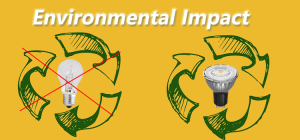
Energy consumption directly influences carbon footprint.
According to the U.S. DOE:
Switching to LED lighting in the U.S. could save hundreds of terawatt-hours of electricity annually, significantly reducing greenhouse gas emissions.
出典:
DOE Solid-State Lighting Report
https://www.energy.gov/eere/ssl
Additionally, the European Union has phased out many halogen lamps due to efficiency regulations.
EU Ecodesign Lighting Regulation:
https://energy-efficient-products.ec.europa.eu/ecodesign-and-energy-label/legislative-framework_en
This reflects global regulatory movement away from halogen technology.
6. 5-Year Total Cost Comparison
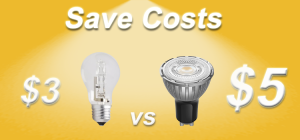
Assume:
- Daily use: 5 hours
- Electricity cost: $0.15 per kWh
Halogen (50W)
Energy use per year:
50W × 5h × 365 = 91.25 kWh
Annual energy cost ≈ $13.69
Plus multiple replacements over 5 years.
LED (7W)
Energy use per year:
7W × 5h × 365 = 12.78 kWh
Annual energy cost ≈ $1.92
Over 5 years, energy savings exceed initial price difference.
Total cost of ownership strongly favors LED.
7. When Might Halogen Still Be Used?
Despite efficiency disadvantages, halogen may still be chosen when:
- Perfect dimming curve is required
- Extremely low upfront cost is critical
- Existing legacy systems are not LED compatible
However, compatibility issues can often be resolved with proper LED driver selection.
8. Professional Recommendation Summary
For most applications in 2026:
LED spotlights offer:
- Dramatically higher efficiency
- Significantly longer lifespan
- Lower operating cost
- Reduced heat risk
- Regulatory compliance
Halogen’s primary advantage — color rendering and dimming smoothness — is now achievable with modern high-CRI dimmable LED systems.
結論
Halogen bulbs are not “bad” technology — but they are outdated in efficiency-driven environments.
For residential, retail, hospitality, and commercial projects, LED spotlights provide measurable advantages in:
- Energy savings
- Maintenance reduction
- Safety
- Environmental compliance
- Long-term operating cost
Choosing between LED and halogen is no longer primarily about light quality — it is about efficiency and total lifecycle performance.
Upgrading from halogen to LED requires attention to:
- Beam angle equivalency
- Color temperature matching
- Dimming compatibility
- Enclosed fixture heat conditions
- Driver stability
Before large-scale retrofits, technical evaluation can prevent flicker issues, premature failure, or light distribution mismatch.
If you are planning a halogen-to-LED conversion project and require engineering guidance on:
- GU10 or MR16 replacements
- High-CRI spotlight selection
- Dimming system compatibility
- Commercial retrofit specification
Our technical team can assist with optical matching and driver evaluation to ensure smooth transition and long-term reliability.
Provide your existing fixture type, dimmer model, and project scope for professional assessment.