调光至暖光 vs 常规 LED:为何感觉更自然
Lighting technology has advanced quickly over the past decade, yet one question continues to surface among designers, hotel operators, and residential users: Why do some LED lights feel warm and inviting, while others seem flat or sterile?
A major part of the answer lies in how the light behaves when dimmed. Regular LEDs simply lower brightness. Dim-to-warm LEDs lower brightness 和 warm the color temperature at the same time, mimicking incandescent glow and more closely matching natural lighting cues.
This difference might sound small on paper, but in real environments—guestrooms, restaurants, lounges, living rooms—the contrast is immediately noticeable. Warmth affects comfort. Comfort affects behavior. And light that changes as the evening progresses feels inherently more human.
This article breaks down the technical and experiential differences between dim-to-warm and regular LEDs, explains why dim-to-warm feels more natural, and explores where each technology performs best in modern lighting design.
How Dim-to-Warm LEDs Work
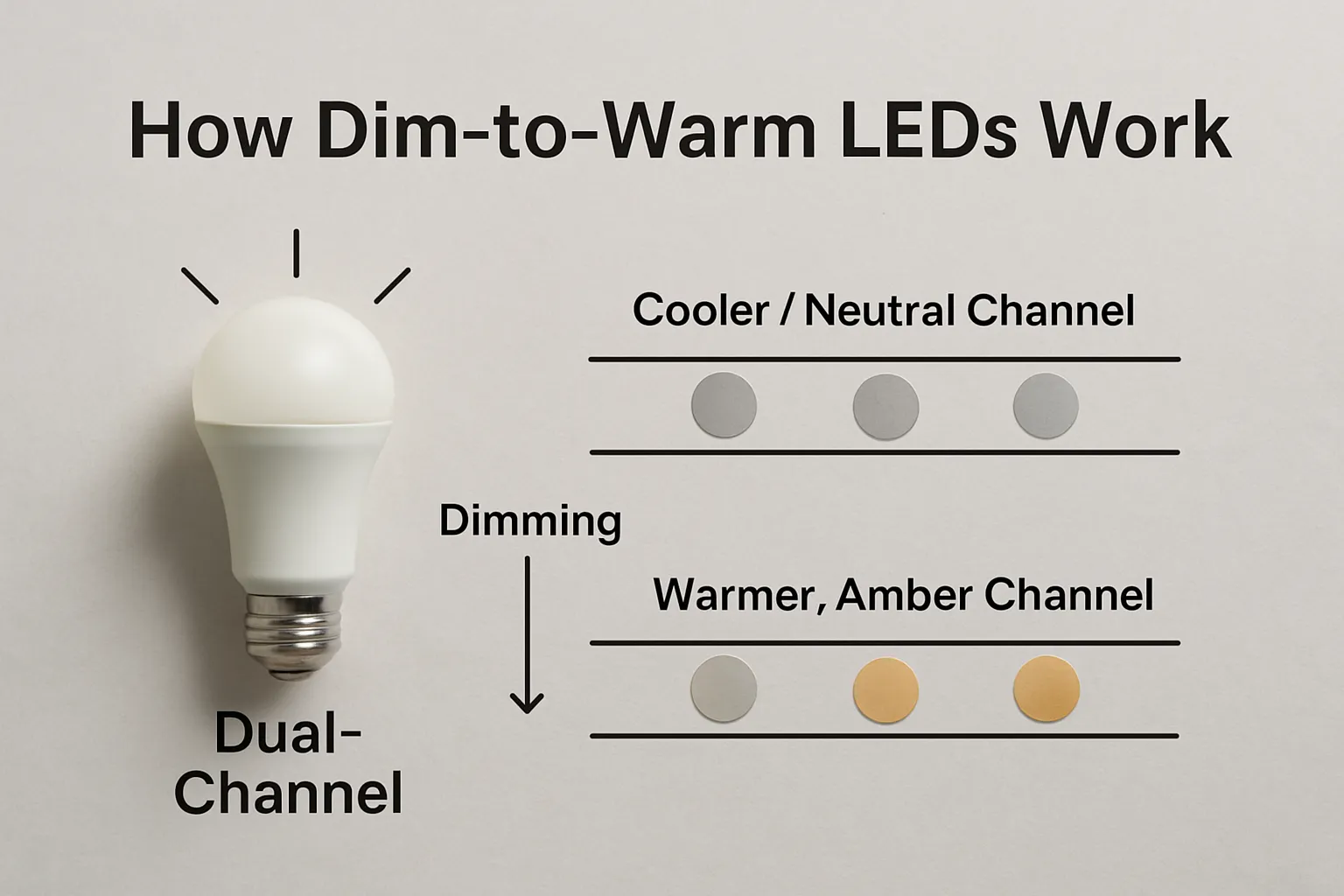
Regular LEDs produce a fixed color temperature—2700K, 3000K, 4000K, or any chosen CCT. Dim-to-warm LEDs behave differently: their color temperature gradually lowers as brightness decreases, shifting from a neutral white at full output to a warm amber tone at low levels.
A typical dim-to-warm LED transitions from 3000K → 1800K, closely matching the curve of a halogen lamp. This characteristic alone changes how people perceive a space.
Dual-Channel or Phosphor-Tuned Systems
Dim-to-warm LEDs generally use one of two approaches:
1. Dual-Channel LEDs
Two LED groups—one cooler, one warmer—operate simultaneously.
As output drops, the driver reduces the cool channel and increases the warm one.
This ensures:
- Smooth color temperature changes
- No sudden jumps between CCT
- High control accuracy even at deep dim levels
2. Phosphor-Tuned LEDs
A more integrated approach where phosphor chemistry responds predictably across the dimming curve.
This is often used in compact consumer bulbs.
The Role of the Driver
The LED driver determines how smoothly the bulb transitions between temperatures.
A well-designed driver ensures:
- Flicker-free performance
- Accurate color rendering (often CRI 90+)
- Stable output with TRIAC or trailing-edge dimmers
- Deep dimming capability below 10%
According to guidance from the 照明工程学会(IES), consistent spectral shift during dimming plays a major role in visual comfort and should align with human circadian expectations.
Why Regular LEDs Often Feel Cold or Unnatural
Regular LEDs were originally engineered for efficiency, not emotional experience. Their fixed color temperature remains unchanged whether dimmed or at full intensity.
This creates several challenges in hospitality and residential settings:
Fixed Spectrum = Fixed Mood
A regular 4000K LED will always look crisp—even when dimmed to 20%.
Brightness changes, but the atmosphere does not.
Designers describe this as:
- “Flat”
- “Cold”
- “Too clinical”
- “Missing warmth in the evening”
Blue-Heavy Spectra Affect Perception
Most regular LEDs contain noticeable spikes in the 450 nm range (blue wavelength).
Research from the Lighting Research Center (LRC) shows:
- Blue-rich light signals alertness
- Warm (low-blue) light signals relaxation
- Light spectrum strongly influences comfort, not just brightness
So even if a regular LED is dimmed, its unchanged spectral distribution can continue to stimulate alertness—an undesirable effect in bedrooms, lounges, or dining spaces.
Static CCT Cannot Match Human Rhythms
Human circadian patterns expect a natural shift throughout the day:
- Bright and cool in the morning
- Warm and low intensity in the evening
Regular LEDs ignore this biological cue, which is why they often feel “wrong” in nighttime environments.
Why Dim-to-Warm LEDs Feel So Natural
Dim-to-warm LEDs trigger familiarity—people instinctively recognize the warm fade of halogen and incandescent light because those sources behaved the same way for decades.
But beyond nostalgia, the natural feel comes from three deeper reasons.
1. They Follow the Pattern of Natural Light

Outdoor light gradually warms as the sun sets.
A dim-to-warm LED mimics this progression:
| Lighting Condition | Approximate CCT |
|---|---|
| Midday sunlight | 5000–5500K |
| Afternoon light | 3500–4000K |
| Sunset | 2000–2500K |
| Candlelight | 1800K |
By following this trajectory, dim-to-warm LEDs create light that aligns with human expectations.
2. Shadows Become Softer and More Comfortable
Warm light contains more red and yellow wavelengths, reducing:
- Harsh contrast
- 眩光
- Visible imperfections
This makes skin tones look healthier—one reason hotels and restaurants rely heavily on dim-to-warm lighting.
3. They Support Evening Relaxation
Studies cited by the WELL Building Standard indicate that reducing blue light in the evening helps maintain relaxation and aligns better with nighttime biology.
For B2B users—hotels, designers, developers—this translates to measurable impacts:
- Better guest satisfaction
- Longer dwell time in lounges or restaurants
- Increased perceived value of interior design
Technical Comparison: Dim-to-Warm vs Regular LEDs
Below is a summary of how both technologies differ in performance and perception.
Color Behavior
| 特点 | Dim-to-Warm | Regular LED |
|---|---|---|
| 色温 | Changes with dimming | Fixed |
| Range | 3000K → 1800K typical | 2700K / 3000K / 4000K etc. |
| Resembles Halogen? | 是 | 没有 |
Visual Comfort
| 方面 | Dim-to-Warm | Regular LED |
|---|---|---|
| Natural feel | 高 | 低 |
| Evening comfort | 强烈 | 弱 |
| Warmth perception | Dynamic | Static |
Applications
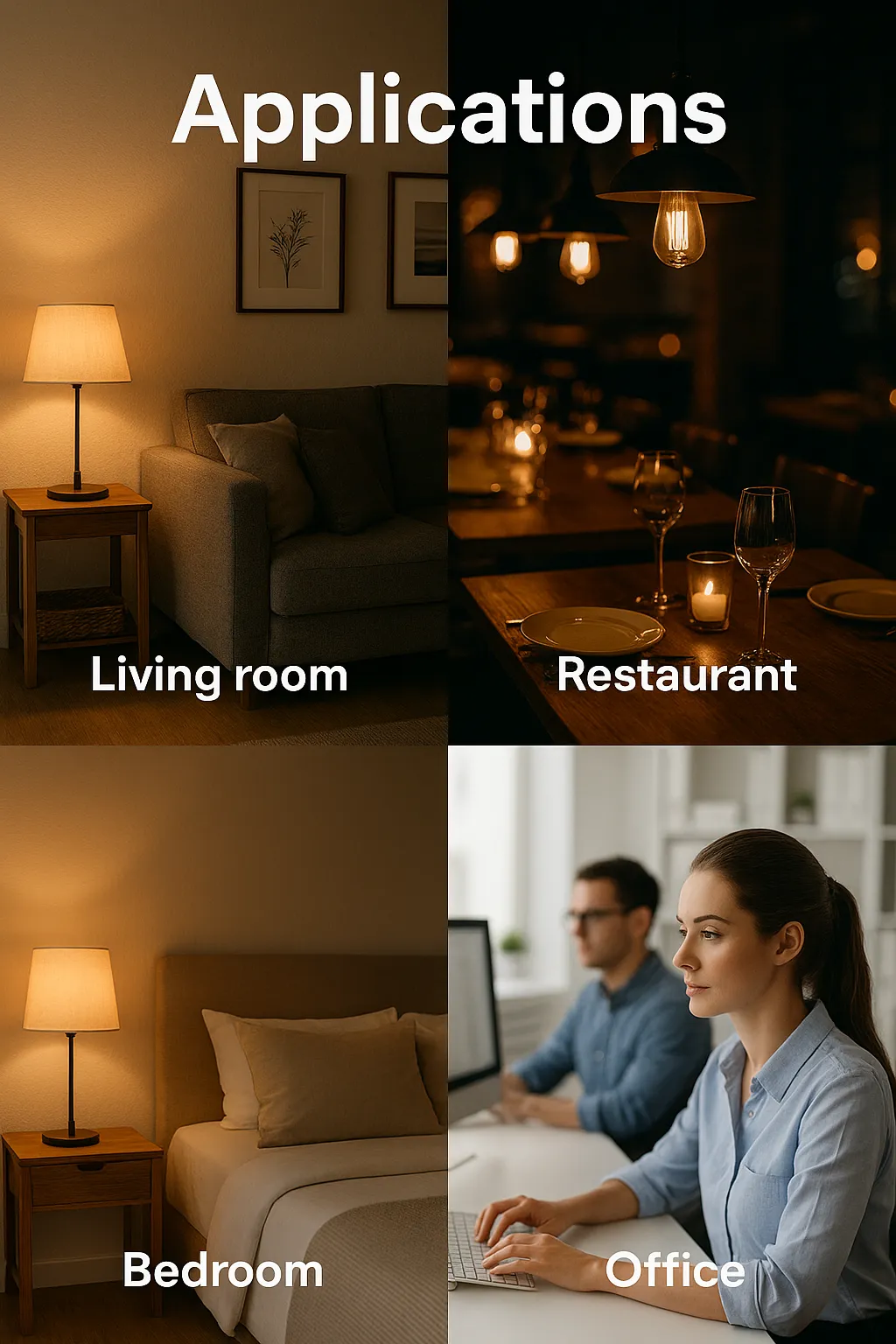
Dim-to-warm excels in:
- 客厅
- 卧室
- 酒店
- 餐厅
- Wellness spaces
- 精品零售
Regular LEDs suit:
- 办公室
- Warehouses
- Educational environments
- Industrial facilities
Best Places to Use Dim-to-Warm LEDs
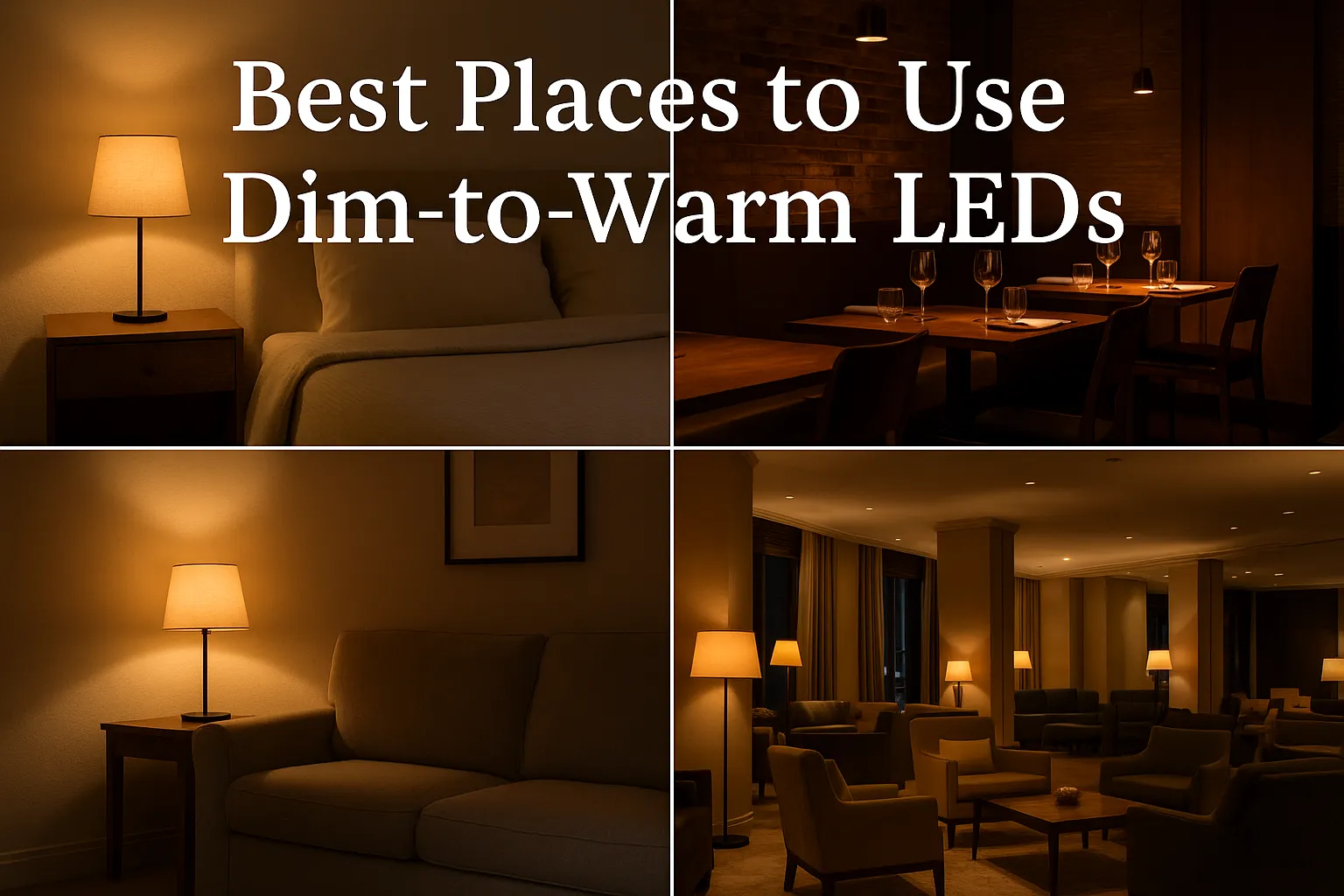
Hospitality Design
Hotels rely heavily on environmental tone.
A dim-to-warm approach allows:
- Brighter CCT for cleaning and daytime setup
- Warmer tones for evenings and guest relaxation
Public areas such as lobbies benefit from gradual transitions that follow the hotel’s operational flow.
住宅
Dim-to-warm LEDs enhance:
- 卧室
- 客厅
- Dining areas
- Hallways used at night
These spaces shift from activity to relaxation, which matches dim-to-warm behavior perfectly.
Commercial Dining
Restaurants prefer 2000–2400K for dinner service.
Dim-to-warm LEDs reach these levels naturally, improving:
- Food presentation
- Skin tone appearance
- Overall ambiance
Is Upgrading Worth It?
For most applications where atmosphere matters, yes.
Cost Difference
Dim-to-warm LEDs are typically:
- 10–25% more expensive
- Slightly more complex in driver design
Value Return
The return is seen in:
- Better design outcomes
- Improved guest or occupant comfort
- Longer stays and higher satisfaction in hospitality environments
- More natural nighttime lighting in homes
Given that LEDs already reduce energy costs significantly, the upgrade is often justified for projects prioritizing atmosphere.
The Key Idea: Natural Light Is Not Static
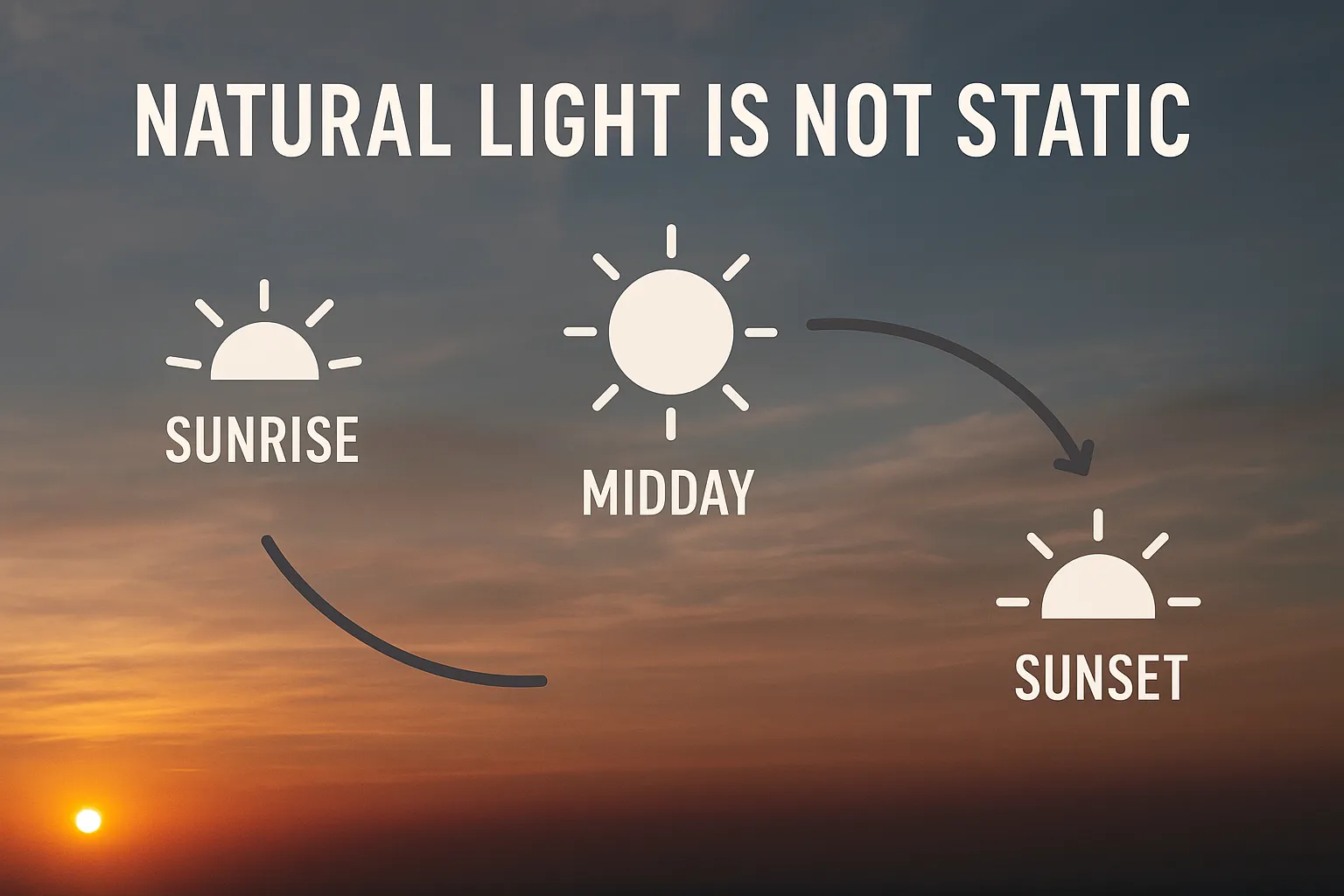
Regular LEDs dim in one direction—down.
Dim-to-warm LEDs dim in two dimensions—down 和 warm.
This dual behavior mirrors both incandescent technology and natural light cycles.
People instinctively perceive this as more relaxing and more familiar.
For designers, this flexibility becomes a powerful tool.
For end users, it simply feels better.
That is the core reason dim-to-warm continues to grow in hospitality, premium residential builds, and any project where comfort is a design priority.
结论
Dim-to-warm LEDs and regular LEDs serve different purposes. Regular LEDs prioritize efficiency and clarity, while dim-to-warm LEDs prioritize atmosphere and comfort.
If the goal is a lighting environment that evolves naturally through the evening, supports relaxation, and enhances material textures, dim-to-warm is the clear choice.
Its dynamic color shift creates a more human experience—one that regular LEDs, with their fixed spectrum, cannot replicate.
If you need high-CRI dim-to-warm GU10, MR16, or A-series lamps, or want recommendations based on CCT curve, dimmer compatibility, or hospitality applications, we can assist.
• Request a sample
• Get a project-based quotation
• Ask for dimming test reports or photometrics
Contact us via WhatsApp, Email, or the Project Inquiry Form to receive tailored recommendations for your lighting application.