Bluetooth Mesh vs. Zigbee: Quale protocollo per l'illuminazione intelligente offre prestazioni migliori?
Introduzione: La gara di connettività nell'illuminazione intelligente
Il mercato globale dell'illuminazione intelligente sta entrando in una nuova era del controllo wireless. Dagli uffici commerciali agli spazi alberghieri, i clienti ora richiedono soluzioni LED connesse che combinano efficienza, flessibilità e visibilità dei dati. Due delle principali tecnologie di connettività che abilitano questa trasformazione sono Bluetooth Mesh e Zigbee.
Entrambi i protocolli alimentano milioni di installazioni di illuminazione in tutto il mondo — eppure differiscono significativamente in architettura, scalabilità, latenza, interoperabilità e prestazioni energetiche. Per i produttori e gli acquirenti B2B che selezionano lampadine LED intelligenti o apparecchi, scegliere il protocollo giusto può determinare non solo l'esperienza utente, ma anche l'affidabilità a lungo termine del sistema e il potenziale di integrazione.
In questo articolo, esploreremo Bluetooth Mesh vs. Zigbee in profondità — come funziona ciascuno, dove eccelle ciascuno e come decidere quale protocollo si adatta meglio al tuo prossimo progetto di illuminazione.
L'ascesa del controllo dell'illuminazione wireless
Le reti di controllo dell'illuminazione si sono evolute rapidamente nell'ultimo decennio. Una volta limitate ai sistemi cablati DALI o 0–10 V, gli standard wireless ora consentono agli installatori di distribuire, scalare e riconfigurare reti senza installare nuovi cavi.
Secondo MarketsandMarkets, il mercato dell'illuminazione intelligente raggiungerà 27,7 miliardi di USD entro il 2026, guidato da adozione dell'IoT e normative energetiche (fonte).
Protocolli mesh wireless come Zigbee, Bluetooth Mesh, e Thread sono diventati dominanti perché:
- Abilita comunicazione nodo-a-nodo (reti auto-riparanti).
- Ridurre la complessità della messa in servizio.
- Offre l'efficienza energetica attraverso comunicazione a basso consumo.
- Supportare l'integrazione con sistemi IoT e di gestione degli edifici.
Come funziona Zigbee
Zigbee è un protocollo di rete mesh wireless a basso consumo basato sul IEEE 802.15.4 standard. Opera principalmente nella banda ISM 2.4 GHz, sebbene esistano versioni regionali sub-GHz.
Caratteristiche chiave:
- Topologia a maglia: Ogni dispositivo (luce, interruttore, sensore) può ritrasmettere messaggi, estendendo portata e resilienza.
- Architettura del coordinatore: La rete si basa su un “coordinatore” centrale (gateway o hub) per gestire i dispositivi.
- Basso tasso di dati: Tipicamente 250 kbps — sufficiente per comandi di controllo, non per dati ad alta larghezza di banda.
- Interoperabilità: Ampiamente supportato negli ecosistemi (Philips Hue, IKEA TRÅDFRI, Amazon Echo, ecc.).
Lo Zigbee Alliance — ora rinominato come Connectivity Standards Alliance (CSA) — mantiene programmi di certificazione per garantire l'interoperabilità dei dispositivi.
(Sito ufficiale CSA)
Come funziona Bluetooth Mesh
Bluetooth Mesh si basa sull'onnipresente Bluetooth Low Energy (BLE) standard ma lo estende per creare reti mesh su larga scala. Introdotto nel 2017 da Bluetooth SIG, è stato progettato specificamente per l'automazione degli edifici e il controllo dell'illuminazione.
Caratteristiche chiave:
- Architettura mesh a inondazione: I messaggi vengono trasmessi in broadcast attraverso la rete senza fare affidamento su un hub centrale.
- Hardware Bluetooth standard: Funziona sulla stessa banda a 2,4 GHz utilizzata dal BLE.
- Commissioning diretto da smartphone: I dispositivi possono essere configurati tramite app Bluetooth standard — nessun hub richiesto.
- Latenza e affidabilità: Comunicazione a bassa latenza adatta per scene di illuminazione reattive.
(Panoramica di Bluetooth SIG Mesh)
Poiché il Bluetooth è già integrato in quasi tutti gli smartphone e tablet, commissioning, manutenzione e controllo utente diventano più semplici e convenienti rispetto ai gateway proprietari.
Confronto tecnico: Bluetooth Mesh vs. Zigbee
| Caratteristica | Bluetooth Mesh | Zigbee |
|---|---|---|
| Tipo di rete | Mesh a inondazione (senza coordinatore) | Mesh instradato con coordinatore |
| Banda di frequenza | 2.4 GHz ISM | 2,4 GHz (globale), sub-GHz opzionale |
| Velocità di trasmissione dati | Fino a 1 Mbps (BLE 5.0) | 250 kbps |
| Portata (per hop) | ~30 m all'interno (estendibile tramite nodi relay) | ~20–100 m a seconda della potenza e dell'antenna |
| Numero massimo di nodi per rete | 32.000+ nodi (teorico) | ~65.000 nodi (teorico) |
| Latenza | Tipicamente 10–30 ms | Tipicamente 50–100 ms |
| Commissioning | Diretto tramite smartphone (senza hub) | Richiede gateway/coordinatore |
| Interoperabilità | Richiede lo stesso modello del fornitore (profili SIG) | Ecosistema ampio (certificazione CSA) |
| Sicurezza | Crittografia AES-128 con chiavi gestite | AES-128, crittografia a livello di collegamento |
| Efficienza Energetica | Molto alta (ottimizzata per BLE 5.0) | Moderata; dipende dal carico di instradamento |
| Connettività Internet | Richiede un bridge BLE-Wi-Fi per il cloud | Il gateway fornisce il collegamento Internet |
| Casi d'uso tipici | Illuminazione commerciale, retail, case intelligenti | Grandi siti commerciali, automazione industriale |
Fonti:
Analisi delle prestazioni

5.1 Latenza e Reattività
- Bluetooth Mesh offre transizioni di scena più veloci — spesso sotto i 30 ms tra comando e risposta della luce, ideale per scene di illuminazione dinamiche.
- Zigbee, sebbene leggermente più lento, fornisce un routing deterministico, migliore per grandi installazioni multi-zona in cui è importante una consegna prevedibile.
5.2 Scalabilità
Zigbee scala efficientemente in infrastrutture molto grandi (es. magazzini, campus) utilizzando router e coordinatori. Bluetooth Mesh può anche scalare ma potrebbe richiedere un'attenta pianificazione della rete per gestire l'inondazione di messaggi ed evitare congestione in reti con >1.000 nodi.
5.3 Efficienza Energetica
Entrambi sono progettati per un basso consumo energetico. I brevi pacchetti pubblicitari del BLE offrono Bluetooth Mesh fino a 15 % consumo energetico inferiore per messaggio vs. Zigbee a carichi simili (Rapporto di test Silicon Labs 2023).
5.4 Affidabilità
La topologia instradata di Zigbee è resiliente — se un router fallisce, altri reindirizzano automaticamente i messaggi. L'approccio a inondazione di Bluetooth Mesh fornisce ridondanza ma può creare un sovraccarico maggiore se non gestito con limiti sui nodi di relay.
5.5 Interoperabilità
Zigbee ha il vantaggio grazie al suo ampio ecosistema — i principali marchi (Signify, IKEA, Tuya, Schneider) sono certificati secondo lo stesso standard CSA.
I dispositivi Bluetooth Mesh devono condividere lo stesso Definizioni di modelli adottate dal SIG, ma la compatibilità multi-vendor sta migliorando. (Aggiornamento Bluetooth SIG 2024)
Installazione e Commissioning
Bluetooth Mesh
- La messa in servizio può essere effettuata direttamente tramite smartphone utilizzando app del fornitore o conformi allo standard SIG.
- Nessuna necessità di hub dedicati, il che riduce il costo della BOM e semplifica la configurazione.
- Ideale per progetti di retrofit e spazi commerciali piccoli e medi.
Zigbee
- Richiede un gateway (ad esempio, Philips Hue Bridge o Tuya Hub) per gestire la rete.
- Più adatto per gestione centralizzata di grandi implementazioni su più piani o edifici.
- La messa in servizio richiede tipicamente strumenti di integrazione (ad esempio, Daintree ControlScope, Osram Lightify Pro).
Confronto dei Casi d'Uso

| Applicazione | Protocollo consigliato | Motivo |
|---|---|---|
| Piccolo retail o ospitalità | Bluetooth Mesh | Configurazione rapida, controllo da smartphone, basso costo infrastrutturale |
| Grandi Uffici Commerciali | Zigbee | Instradamento stabile, gestione gateway, integrazione con BMS |
| Impianti Industriali | Zigbee | Elevato numero di nodi, controllo robusto della rete |
| Ristrutturazione Casa Intelligente | Bluetooth Mesh | Funziona con telefoni e interruttori BLE |
| Illuminazione esterna / stradale | Zigbee (o Thread) | Portata estesa, opzioni sub-GHz |
| Illuminazione Scaffali Retail / Vetrine | Bluetooth Mesh | Risposta rapida, controllo locale, raggruppamento scene |
Sicurezza e Manutenzione
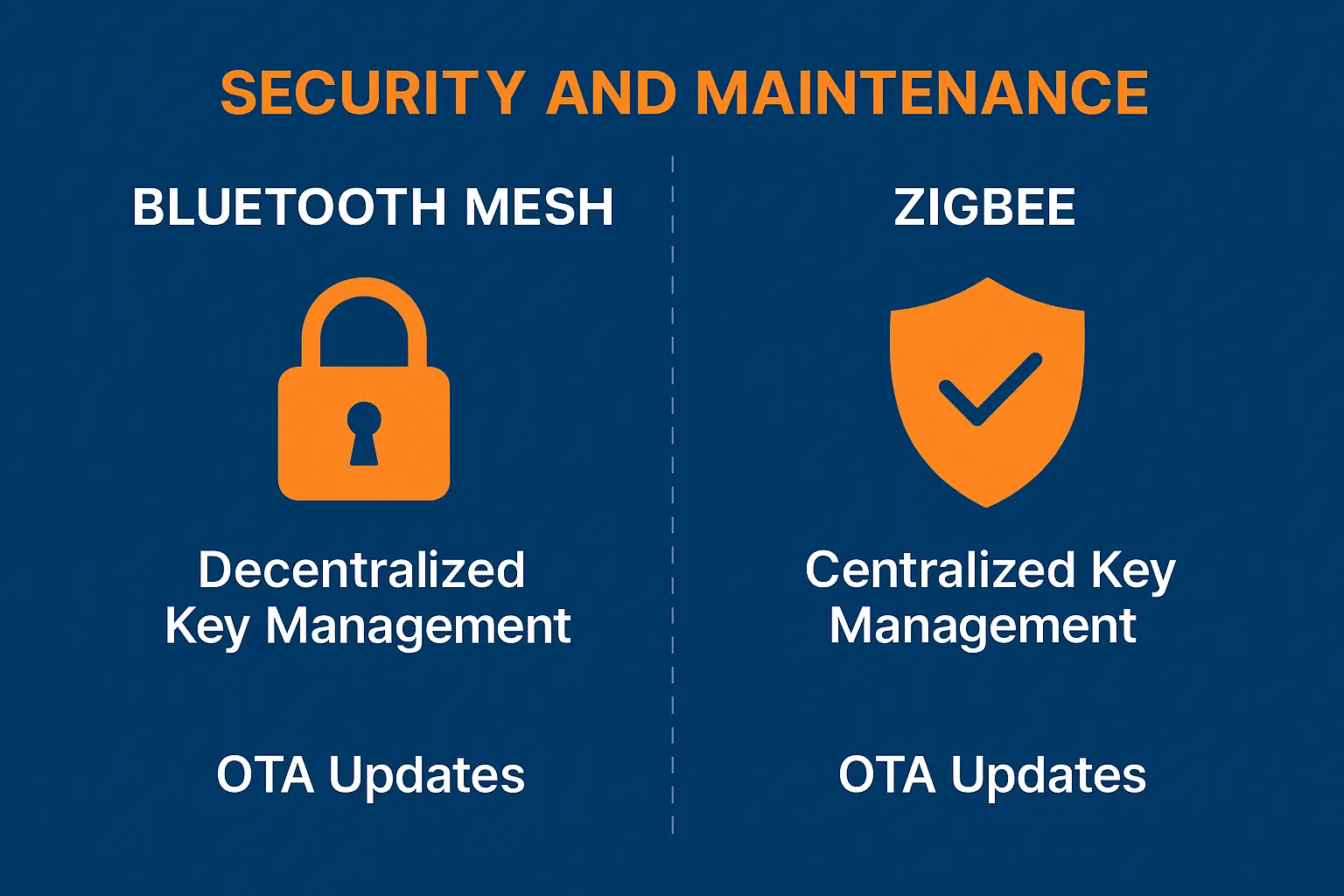
Entrambi i protocolli utilizzano Crittografia AES-128 ma differiscono nella distribuzione delle chiavi:
- Zigbee: Gestione centralizzata delle chiavi da parte del coordinatore. Ideale per ambienti aziendali ma richiede una sicurezza robusta del gateway.
- Bluetooth Mesh: Gestione decentralizzata delle chiavi — ogni dispositivo memorizza le chiavi di rete e applicative localmente. Ciò riduce i rischi di punto singolo di guasto.
Gli aggiornamenti del firmware sono sempre più supportati over-the-air (OTA) da entrambi i sistemi. Ad esempio, SDK Bluetooth Mesh di Silicon Labs consente la distribuzione del firmware a migliaia di nodi simultaneamente. (Documentazione OTA di Silicon Labs)
Integrazione con Piattaforme IoT e Cloud
Zigbee
Poiché Zigbee si connette tipicamente tramite un hub, si integra facilmente in ecosistemi cloud come Amazon Alexa, Google Home, e SmartThings. Questi gateway forniscono accesso API per la gestione remota su larga scala.
Bluetooth Mesh
I dispositivi BLE si connettono localmente e utilizzano un Ponte BLE-Wi-Fi o gateway per le funzioni cloud. Il vantaggio è che le reti Bluetooth Mesh possono comunque funzionare completamente offline se il collegamento Internet fallisce, mantenendo il controllo locale.
Il Bluetooth SIG riporta che il 92 % delle reti di illuminazione Bluetooth Mesh commerciali sono utilizzate in configurazioni “ibride locali più cloud” per affidabilità. (Aggiornamento del Mercato Bluetooth SIG 2023)
Costo e maturità dell'ecosistema

| Fattore | Bluetooth Mesh | Zigbee |
|---|---|---|
| Costo del Modulo (appross.) | $1.80 – $3.50 per unità | $2,50 – $4,00 per unità |
| Requisito del Gateway | Opzionale | Obbligatorio |
| Fornitori dell'Ecosistema | 200+ (CSR, Nordic, Silicon Labs, Tuya, ecc.) | 500+ (Philips, Osram, Tuya, Schneider, ecc.) |
| Costo dello Stack Software | Spesso senza royalty (SIG) | Concesso in licenza o integrato tramite partner OEM |
| Time-to-Market | Più breve (utilizza hardware BLE standard) | Più lungo (certificazione, configurazione del gateway) |
Fonti:
Per gli OEM, Bluetooth Mesh può ridurre i costi hardware e di certificazione mantenendo al contempo la scalabilità per implementazioni di piccole e medie dimensioni. Zigbee rimane dominante in sistemi di illuminazione aziendali e industriali dove la gestione e la profondità di integrazione superano i costi dei componenti.
Esempi Reali

- Philips Hue (Zigbee): Oltre 100 milioni di lampadine basate su Zigbee distribuite a livello globale (Relazione Annuale Signify 2023).
- Casambi (Bluetooth Mesh): Leader europeo dell'illuminazione commerciale con oltre 1 milione di reti tra progetti retail e architettonici (casambi.com).
- Serie Smart Tecolite: Usi Controllo Bluetooth Mesh per lampadine LED GU10 e MR16 per semplificare la messa in servizio senza hub aggiuntivi.
Implicazioni Ambientali ed Efficienza Energetica
I protocolli di comunicazione efficienti influenzano direttamente il consumo energetico complessivo del sistema.
- Il basso sovraccarico di pacchetti e la pianificazione del sonno di Bluetooth Mesh riducono il consumo energetico della rete di controllo del fino a 30 % in piccole installazioni.
- Il sovraccarico di instradamento di Zigbee aumenta leggermente il consumo energetico ma rimane efficiente nelle reti multi-hop di grandi dimensioni.
Poiché l'illuminazione rappresenta quasi 15 % del consumo elettrico globale, l'adozione di controlli wireless efficienti supporta gli obiettivi di sostenibilità aziendale. (Rapporto sull'Efficienza dell'Illuminazione IEA 2022)
Quale Protocollo Performa Meglio Complessivamente?
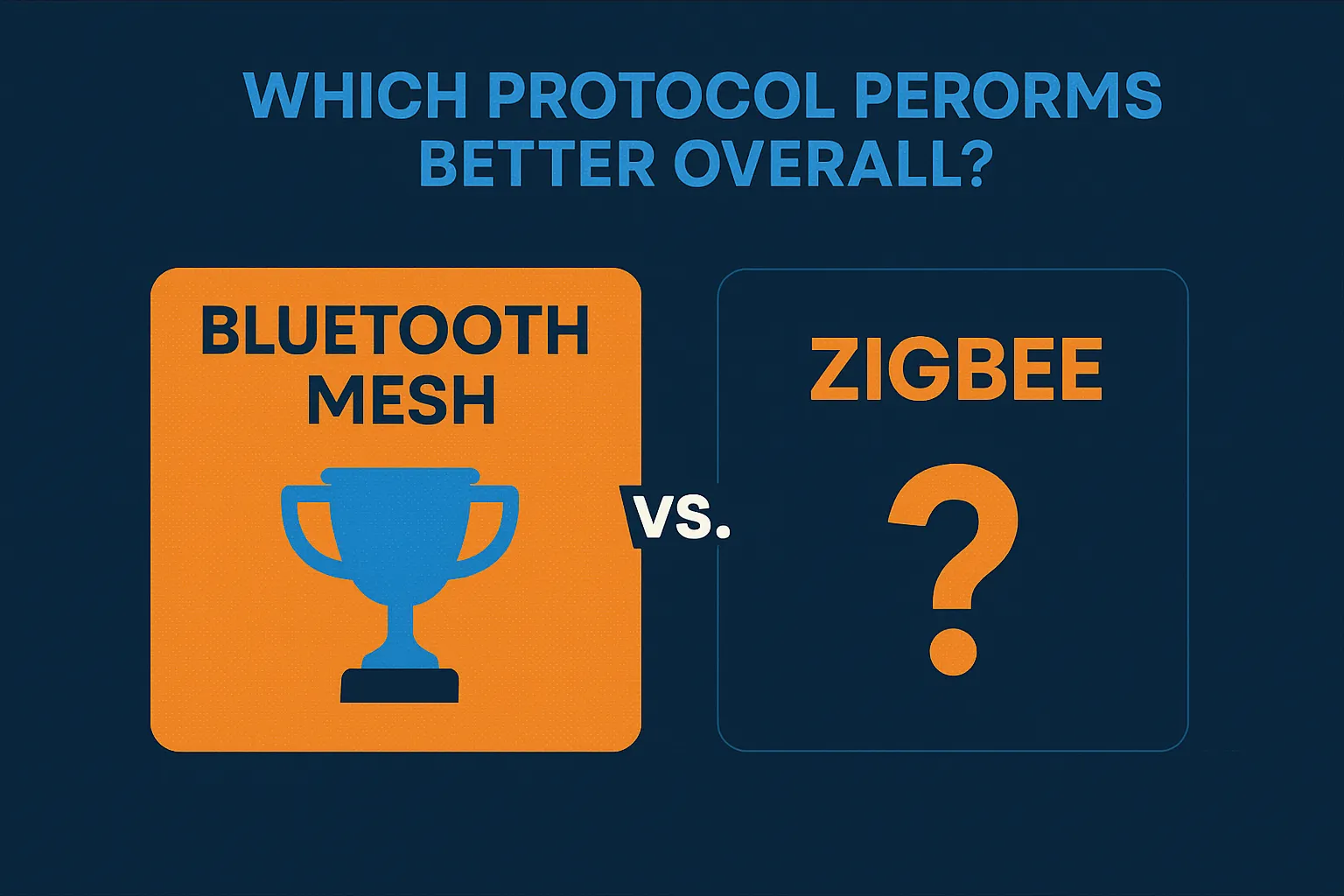
| Categoria | Vincitore | Note |
|---|---|---|
| Facilità di Implementazione | Bluetooth Mesh | Nessun hub, messa in servizio tramite smartphone |
| Gestione su Larga Scala | Zigbee | Migliore per reti aziendali |
| Latenza / Tempo di Risposta | Bluetooth Mesh | Transizioni di scena più veloci |
| Dimensione dell'Ecosistema | Zigbee | Base di fornitori consolidata |
| Efficienza dei Costi | Bluetooth Mesh | Costi hardware e di configurazione inferiori |
| Integrazione Cloud | Zigbee | Nativo tramite API gateway |
| Funzionamento offline | Bluetooth Mesh | Controllo completo senza Internet |
| Efficienza Energetica | Bluetooth Mesh (slightly) | Lower packet overhead |
Verdict:
- For retrofit and small-to-medium commercial lighting, Bluetooth Mesh offers simpler deployment, lower cost, and faster control.
- For large multi-building or centralized enterprise networks, Zigbee remains the preferred choice for robust routing and system-wide management.
Future Outlook: Matter and Unified IoT Standards
Both Zigbee and Bluetooth Mesh are expected to coexist under the emerging Matter protocol (developed by the CSA). Matter uses IP-based communication and bridges existing ecosystems — including Zigbee and BLE — to provide seamless smart-home and commercial interoperability. (CSA Matter Overview)
Manufacturers investing today in BLE 5.0+ and Zigbee 3.0 hardware are already future-proofing their designs for Matter compatibility, ensuring long-term interoperability.
Conclusion: Making the Smart Choice
Both Bluetooth Mesh e Zigbee deliver reliable, efficient, and secure wireless control for LED lighting systems. The better option depends on your project size, network complexity, e user interface requirements.
For lighting manufacturers producing retrofit bulbs like GU10, MR16, or AR111, Bluetooth Mesh provides the most practical path to smart connectivity — fast setup, smartphone control, and hub-free deployment.
For large-scale B2B projects such as commercial campuses or industrial plants, Zigbee remains a trusted workhorse with mature management tools.
Ultimately, the most effective approach may be a hybrid model — combining both protocols under unified Matter or cloud frameworks, enabling maximum flexibility, scalability, and user satisfaction.
Whether you’re designing smart bulbs, retrofit modules, or connected lighting fixtures, understanding the differences between Bluetooth Mesh and Zigbee is key to building scalable and reliable solutions.
At Tecolite, we specialize in designing and manufacturing smart LED bulbs — including GU10, MR16, and AR111 models — that integrate seamlessly with both Bluetooth Mesh and Zigbee ecosystems.
Our engineering team helps OEM partners and distributors develop energy-efficient, standards-compliant products ready for Energy Label 2.0, Ecodesign, e Matter future compatibility.
Visit tecolite.com to explore our smart-lighting solutions or contact our sales team to discuss customized wireless control options for your next project.